
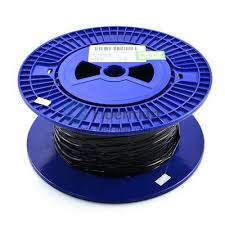

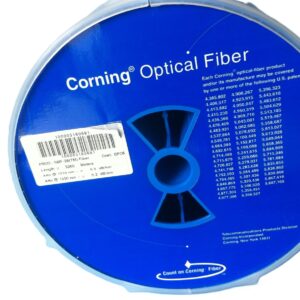
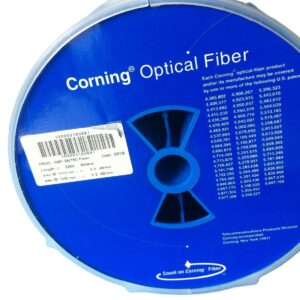
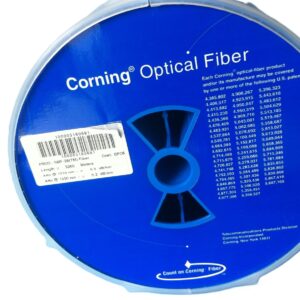
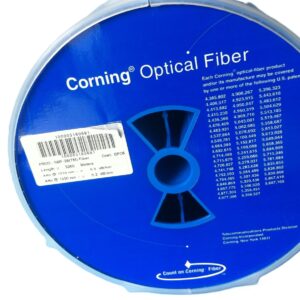
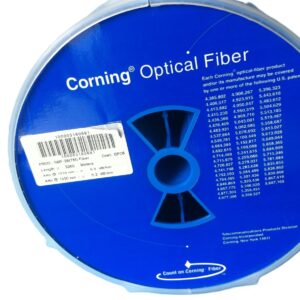
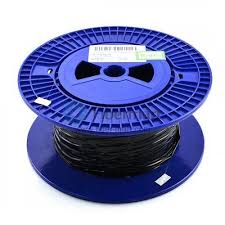
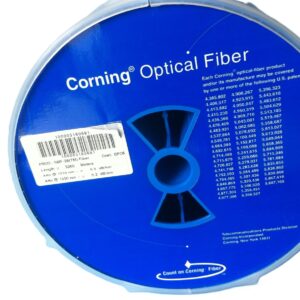
Corning SMF-28e is a single-mode optical fiber engineered for long-distance, high-bandwidth data transmission over extended link lengths. This 500 km spool delivers consistent performance across C-band and L-band wavelengths with attenuation of ≤ 0.03 dB/km at 1310 nm, 1550 nm, and 1625 nm. The fiber meets ITU-T G.652.D standards and maintains full backward compatibility with legacy single-mode networks, enabling seamless integration into both new installations and system upgrades.
– Technical Specifications
Optical Performance
• Core diameter: 9 µm
• Cladding diameter: 125 µm
• Mode-field diameter: 9.2 ± 0.4 µm at 1310 nm
• Cable cutoff wavelength: ≤ 1260 nm
• Attenuation: ≤ 0.03 dB/km (1310, 1550, 1625 nm)
• Dispersion at 1550 nm: ≤ 18.0 ps/(nm•km)
• Dispersion at 1625 nm: ≤ 22.0 ps/(nm•km)
• Zero dispersion wavelength: 1304–1324 nm
• Zero dispersion slope: ≤ 0.092 ps/(nm²•km)
• PMD link design value: ≤ 0.06 ps/√km
• Maximum individual fiber PMD: ≤ 0.1 ps/√km
• Macrobend loss at 1550 nm (50 mm mandrel, 100 turns): ≤ 0.03 dB
Mechanical & Environmental
• Operating temperature: -60°C to +85°C
• Tensile proof stress: ≥ 100 kpsi (0.7 GPa)
• Coating diameter: 245 ± 5 µm
• Coating concentricity: ≤ 2 µm
• Fiber curl: ≤ 4.0 m radius of curvature
– Key Features
• Ultra-low attenuation across C, L, and extended L-bands ensures signal fidelity over 500 km spans
• Dispersion characteristics support high-speed digital and analog transmission without regeneration
• Predictable PMD performance (≤ 0.06 ps/√km design value) meets coherent and high-baud-rate modulation requirements
• Excellent macrobend performance minimizes splitter and connector-induced losses
• Wide temperature operating range (-60°C to +85°C) suits terrestrial and submarine deployments
– Typical Applications
• Long-haul terrestrial backbone networks
• Metropolitan and regional fiber-optic infrastructure
• Submarine cable systems
• High-capacity wavelength-division multiplexing (WDM) systems
• Legacy fiber network upgrades and compatibility requirements
– Compatibility & Integration
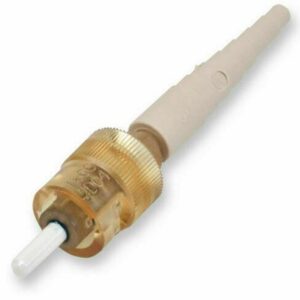
ITU-T G.652.D compliance ensures full interoperability with existing single-mode fiber plant. The 9 µm core and 125 µm cladding geometry accept standard fusion splicers, mechanical couplers, and connector hardware. Zero dispersion wavelength positioning (1304–1324 nm) permits operation in conventional 1310 nm systems with minimal chromatic dispersion or selection of 1550 nm transmission for reduced attenuation in long-distance links.







Reviews
There are no reviews yet.