


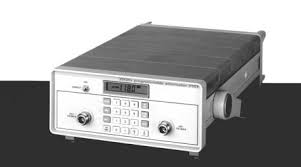
The Stanford Research CG645 is a high-performance PECL clock generator delivering stable, precise timing signals up to 2050 MHz. Engineered for applications demanding stringent clock integrity—including high-speed digital systems, telecommunications infrastructure, and semiconductor testing—the CG645 provides the low-jitter outputs and clean spectral performance required in demanding laboratory and production environments.
– Technical Specifications
Clock Generation
• Frequency range: Up to 2050 MHz
• Output signal type: PECL (+2.5Vcc)
• Output impedance: 50 Ω
• Jitter (RMS): Typically < 1 ps rms
• Transition time: 80 ps (20% to 80%)
Output Connectors
• SMA connectors (standard on similar Stanford Research Systems instruments)
– Key Features
• Sub-picosecond RMS jitter ensures timing fidelity in high-speed applications
• Fast edge transitions (80 ps) support clean clock distribution
• 50 Ω output impedance matches standard digital system interfaces
• PECL signaling provides low-noise differential outputs
– Typical Applications
• High-speed digital system clocking
• Telecommunications and infrastructure timing
• Semiconductor device testing and characterization
• Advanced research laboratory instrumentation
• Systems requiring phase-coherent, low-jitter clock references
– Compatibility & Integration
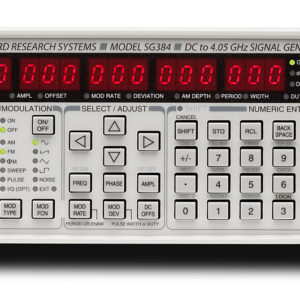
The CG645 operates as a standalone benchtop instrument. Rack-mount configuration options are available, enabling integration into automated test systems and facility-level timing distribution networks. PECL output levels and 50 Ω impedance ensure direct compatibility with digital logic families and high-speed data acquisition equipment.









Reviews
There are no reviews yet.