

RF Power Sensors
Showing 1–12 of 66 results

Marconi IFR Aeroflex 6514 – 26.5-40GHz Detector
$0.00Marconi IFR Aeroflex 6427 Power Head
$730.00Marconi IFR Aeroflex 6420 – .01-12.4GHz Power Head
$0.00
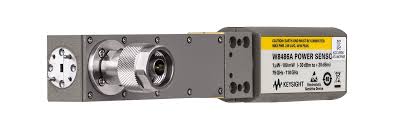
Keysight (Agilent) W8486A 75 GHz – 110 GHz, RF Waveguide Power Sensor
$0.00
Keysight (Agilent) 8474E Planar-Doped Barrier Diode Detector,
$0.00
Keysight (Agilent) 8473C Low-Barrier Schottky Diode Detector
$0.00
Keysight (Agilent) 478A Coaxial Thermistor Mount
$570.00
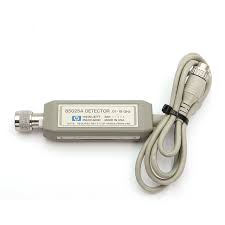
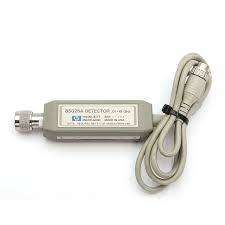
HP 11664A Detector, 20 dBm, 10 VDC, .01-18GHz
$79.00
HP / Agilent 85025D Coaxial Detector, AC/DC, 10 MHz to 50 GHz
$6,782.38HP / Agilent 85025B Detector, 10 MHz to 26.5
$626.38
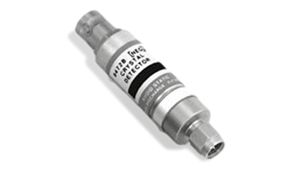
HP / Agilent 8472B Low-Barrier Schottky Diode Detector, 10 MHz to 18 GHz
$482.20
HP / Agilent 5348A 26.5 GHz Microwave Counter/Power Meter
$674.98




RF Power Sensors
RF power sensors are precision measurement components used to detect and quantify radio frequency and microwave signal power when connected to an RF power meter or measurement system. While the meter provides processing and display, the sensor is the element that directly interacts with the RF signal. At Aumictech, RF power sensors are treated as critical measurement devices, because sensor performance ultimately determines the accuracy, stability, and reliability of RF power measurements.
Unlike general-purpose RF detectors, professional RF power sensors are designed to deliver consistent, traceable measurements across defined frequency and power ranges. Their construction, calibration quality, and long-term stability play a central role in ensuring confidence in RF test and calibration results.
Role of RF Power Sensors in RF Measurement Systems
RF power sensors convert RF energy into a measurable electrical response that can be processed by a power meter or acquisition system. They serve as the front-end interface between the RF signal and the measurement instrument.
In calibration and verification workflows, RF power sensors establish reference power levels used to validate signal generators, amplifiers, and RF sources. In production testing, they provide fast and repeatable power readings for quality control and final validation.
Because the sensor is directly exposed to the RF signal, its performance affects every subsequent measurement. Proper sensor selection is therefore essential for achieving accurate and repeatable results.
Key Performance Characteristics
Accuracy defines how closely the sensor measurement reflects true RF power. High-quality RF power sensors maintain consistent accuracy across frequency, power level, and temperature variations.
Dynamic range determines the span of power levels the sensor can measure reliably. Sensors with wide dynamic range support both low-level signal detection and higher power measurements without compromising accuracy.
Frequency response affects how evenly the sensor measures power across its specified operating band. Flat and predictable frequency response is critical for broadband and swept-frequency applications.
Linearity ensures that sensor output remains proportional to input power across the operating range. Nonlinear behavior can distort measurements and lead to incorrect conclusions during device characterization.
Response time determines how quickly the sensor reacts to changes in signal power. Fast response is important in pulsed RF applications and automated test systems where timing accuracy matters.
Types of RF Power Sensors
Thermal RF power sensors measure power by converting RF energy into heat and are widely regarded for their accuracy and long-term stability. These sensors are commonly used in calibration laboratories and reference measurement applications.
Diode-based RF power sensors use semiconductor detection methods to provide fast response and wide dynamic range. They are well suited for production testing, system monitoring, and applications requiring rapid measurements.
Peak power sensors are designed to capture transient and pulsed signals, making them essential for radar, burst communication systems, and time-domain RF analysis.
Average power sensors are used for continuous wave and modulated signals where mean power is the primary measurement parameter.
Design and Stability Considerations
RF power sensors are engineered with precision components and carefully controlled internal structures to minimize drift and measurement uncertainty. Connector quality, internal matching, and thermal behavior all influence sensor performance.
Temperature sensitivity is a key design consideration. High-quality sensors incorporate compensation techniques to maintain accuracy under changing environmental conditions.
Mechanical durability is also important, as RF power sensors are frequently connected and disconnected in laboratory and production environments. Robust construction helps preserve measurement integrity over repeated use.
Applications Across Industries
RF power sensors are used across telecommunications, aerospace and defense, semiconductor manufacturing, and research laboratories. They support transmitter validation, amplifier characterization, antenna testing, and compliance verification.
Calibration laboratories rely on RF power sensors to establish traceable reference measurements. Production environments use them to ensure consistent output power across devices and batches.
Field engineers depend on RF power sensors for system verification, troubleshooting, and performance validation in deployed RF systems.