

Sampling Oscilloscopes
Showing 1–12 of 49 results
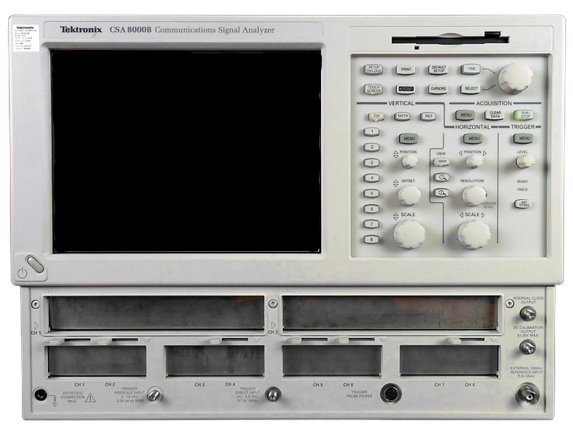
Repair and Service of Tektronix TDS8000B Digital Sampling Oscilloscope
$100.00
Repair and Service of Tektronix DSA8200 Digital Serial Analyzer
$100.00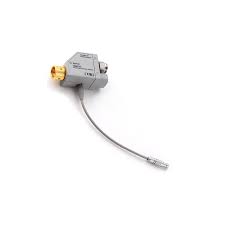
Keysight (Agilent) N5477A Sampling Scope Adapter
$1,100.00
HP 83486A with option H12
$3,980.00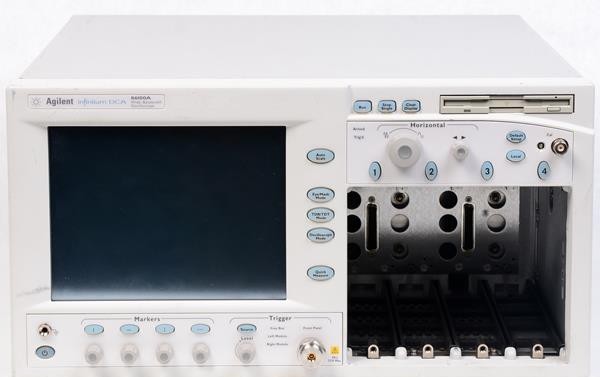
Agilent infiniium Wide-Bandwidth Oscilloscope 86100A No Option Main Frame only
$5,230.00
Keysight / Agilent / HP 54121A 4-Channel Test Set
$3,800.00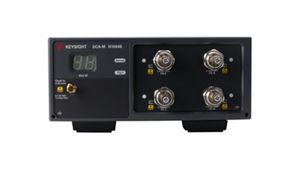
Agilent/Keysight N1094B
$15,900.00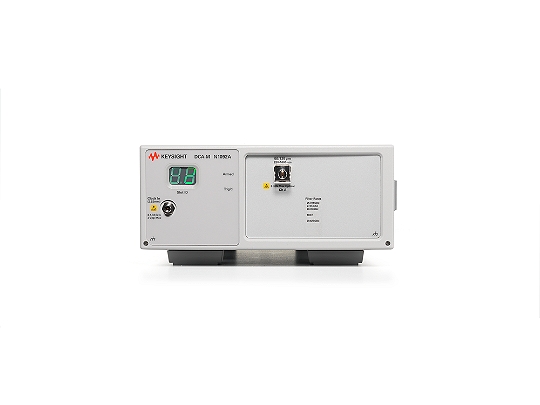
Agilent/Keysight N1092E
$15,900.00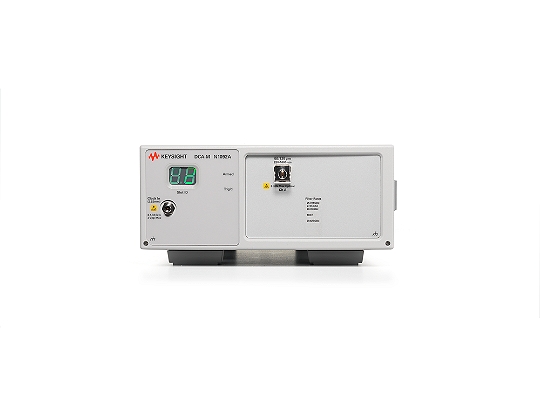
Agilent/Keysight N1092D
$15,900.00
Agilent/Keysight N1092B
$15,900.00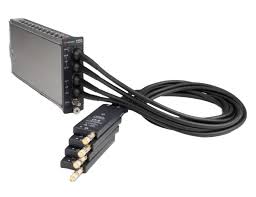
Agilent/Keysight N1055A
$7,590.00
Agilent/Keysight N1046A
$7,590.00
Sampling Oscilloscopes
Sampling oscilloscopes are high-precision instruments designed to measure and analyze ultra-fast electrical and optical signals that exceed the bandwidth limits of conventional real-time oscilloscopes. They are essential tools for characterizing high-speed digital, RF, and optical waveforms where signal integrity and timing accuracy are critical. At Aumictech, sampling oscilloscopes are treated as reference-grade instruments, because they enable visibility into signal behavior at time scales where even small distortions matter.
Unlike real-time oscilloscopes, sampling oscilloscopes reconstruct waveforms by capturing repeated signal events over many cycles. This approach allows extremely high effective bandwidth and timing resolution, making them ideal for applications involving very fast edges, high data rates, and precision timing analysis.
Role of Sampling Oscilloscopes in High-Speed Systems
Sampling oscilloscopes are used to analyze signals in systems where rise time, jitter, eye opening, and waveform shape directly affect performance. They are commonly deployed in optical communication testing, high-speed serial data analysis, and advanced RF and microwave applications.
In fiber-optic systems, sampling oscilloscopes are used to evaluate optical transmitters, receivers, and modulators by analyzing electrical and optical eye diagrams. In electronic systems, they support validation of high-speed interconnects, clock distribution networks, and data paths operating at multi-gigabit rates.
Sampling oscilloscopes are also widely used in calibration and reference measurements where maximum bandwidth and repeatable timing accuracy are required.
Key Performance Characteristics
Bandwidth defines the highest frequency content the oscilloscope can accurately capture. Sampling oscilloscopes offer bandwidths that far exceed traditional real-time instruments.
Time resolution determines how precisely fast transitions and jitter can be measured. Fine timing resolution is critical for accurate eye diagram and jitter analysis.
Jitter performance affects the ability to distinguish true signal behavior from measurement noise. Low intrinsic jitter is essential for reliable high-speed analysis.
Vertical resolution and sensitivity influence the ability to observe small signal variations, especially in optical and low-amplitude electrical measurements.
Trigger stability is important for consistent waveform reconstruction, as sampling oscilloscopes rely on repetitive signals.
Channel configuration and modularity determine how flexibly the instrument can support different measurement setups and signal types.
Types of Sampling Oscilloscopes
Electrical sampling oscilloscopes are used for high-speed electrical signal analysis in digital and RF systems.
Optical sampling oscilloscopes integrate optical sampling modules to directly measure optical waveforms and eye diagrams.
Modular sampling oscilloscopes allow interchangeable sampling heads to support different bandwidths, signal types, and applications.
Multi-channel sampling oscilloscopes support comparative analysis and correlation between multiple signal paths.
Design and Measurement Considerations
Sampling oscilloscopes rely on ultra-fast sampling circuits and precise timing references. The quality of the sampling head and timing system directly influences measurement accuracy.
Signal repeatability is a key requirement, as sampling oscilloscopes reconstruct waveforms over multiple acquisitions. Proper signal conditioning and triggering are essential for meaningful results.
Optical input handling requires careful attention to coupling, power levels, and connector cleanliness to avoid measurement artifacts.
Environmental stability, including temperature and vibration control, helps maintain consistent timing and amplitude performance.
Applications Across Industries
Sampling oscilloscopes are used extensively in fiber-optic telecommunications, data center interconnect testing, semiconductor manufacturing, and photonics research. They support validation of high-speed serial standards, optical transceivers, and ultra-fast electronic devices.
Calibration laboratories rely on sampling oscilloscopes for reference measurements and timing verification. Production environments use them to characterize high-speed components and ensure signal integrity margins.
Research institutions depend on sampling oscilloscopes for advanced waveform analysis, optical experimentation, and next-generation communication system development.