

Arbitrary Waveform Generators (AWGs)
Showing 13–24 of 223 results

NI PXI-5412 PXI Arbitrary Waveform Generator
$0.00NI PCI-5401 16 MHz Function Generator for PCI
$0.00
Keysight / Agilent / HP E1445A Arbitrary Function Generator (Non-QUIC)
$1,950.00
Keysight / Agilent / HP E1441A Arbitrary Waveform Generator
$1,850.00
Keysight / Agilent / HP E1434A 4-Channel 65 kSa/sec Arbitrary Source (w/ Option ANC)
$3,500.00
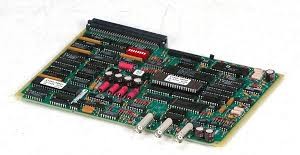
Keysight / Agilent / HP E1340A Arbitrary Function Generator Replacement Board
$450.00
Keysight / Agilent / HP E1340A Arbitrary Function Generator
$950.00
Keysight / Agilent / HP 33250A 80 MHz Function / Arbitrary Waveform Generator
$1,100.00
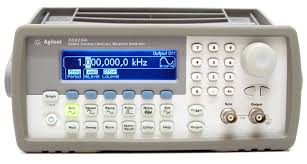
Keysight / Agilent / HP 33220A 20 MHz Function / Arbitrary Waveform Generator
$850.00
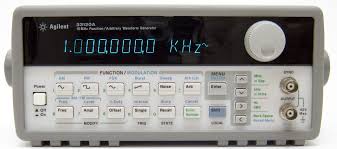
Keysight / Agilent / HP 33120A Function / Arbitrary Waveform Generator
$550.00
Keysight / Agilent / HP 3245A Universal Source
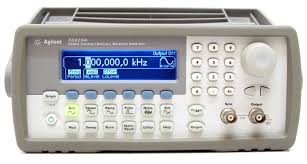
$1,850.00HP / Agilent 33220A Function / Arbitrary Waveform Generator, 20 MHz
$885.58





What Makes an AWG Different?
An AWG is defined by its ability to reproduce real-world, non-ideal signals with extreme accuracy. Engineers use AWGs to emulate distorted, noisy, or protocol-specific signals that cannot be generated using traditional signal sources.
Key technical capabilities include:
User-defined waveform creation (point-by-point or mathematical)
High sampling rates (from MS/s to tens of GS/s)
Deep waveform memory for long or complex patterns
Multi-channel synchronization for phase-coherent outputs
Low jitter and high vertical resolution for precision timing analysis
These features make AWGs indispensable for applications where signal integrity and timing accuracy are critical.
Common Applications of Arbitrary Waveform Generators
AWGs are widely used across industries that demand repeatable, programmable, and high-fidelity signal generation, including:
Semiconductor testing – device characterization, jitter tolerance, eye-diagram stress testing
High-speed digital design – SERDES, DDR, PCIe, USB, Ethernet signal emulation
RF & microwave systems – complex modulated baseband and IF waveform generation
Optical communications – driving modulators for PAM4, QAM, and custom optical formats
Aerospace & defense – radar pulse simulation and electronic warfare testing
Research & academia – waveform prototyping and algorithm validation
Key Technical Specifications to Consider
When selecting an Arbitrary Waveform Generator, engineers typically evaluate the following parameters:
Sampling Rate – Determines maximum signal bandwidth and time resolution
Vertical Resolution (bits) – Impacts waveform accuracy and noise floor
Memory Depth – Controls waveform length and complexity
Output Bandwidth – Defines usable analog frequency range
Channel Count – Single or multi-channel, often phase-locked
Trigger & Sync Capabilities – Critical for system-level testing
Modulation Support – AM, FM, PM, QAM, custom digital modulation
Matching these specifications to your application is essential for achieving accurate and repeatable test results.
Used, Refurbished, and Calibrated AWGs
Many high-performance AWGs are discontinued or cost-prohibitive when purchased new. Professionally refurbished units offer a cost-effective alternative without sacrificing performance. Proper refurbishment includes:
Functional verification across full bandwidth
Output linearity and timing accuracy testing
Memory and DAC integrity checks
Firmware validation
Optional NIST-traceable calibration
Calibrated AWGs are especially important in regulated environments such as semiconductor fabs, defense labs, and accredited research facilities, where measurement traceability is required.
Why AWGs Are Critical in Modern Test Systems
As electronic systems continue to push toward higher data rates, tighter timing margins, and complex modulation schemes, the role of Arbitrary Waveform Generators becomes increasingly important. AWGs enable engineers to stress, validate, and characterize systems under realistic operating conditions, helping uncover issues that would otherwise go undetected.
From early-stage design verification to production-level validation, AWGs remain a cornerstone instrument in advanced electronic and optical test environments.


