
OTDRs
Showing 1–12 of 139 results

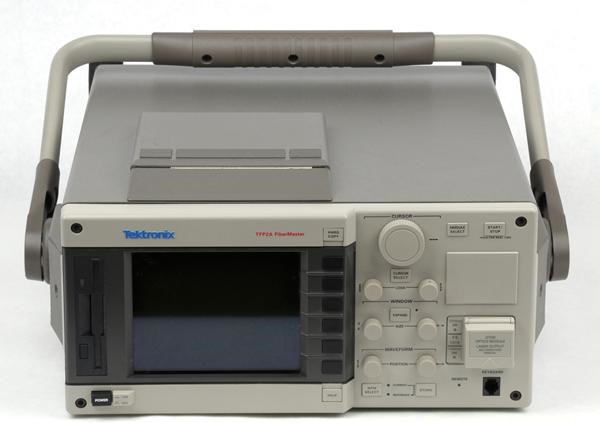
Tektronix TFP2A FiberMaster Optical Time-Domain Reflectometer with 16 and 17
$655.00
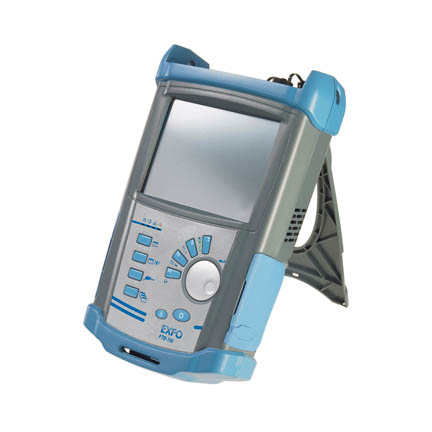
Exfo FTB-200 OTDR
$4,370.00
Exfo BRT-320A Optical reflection meter
$805.00
Anritsu MW9060A Optical Time Domain Reflectometer
$1,030.00
Anritsu MT9083A ACCESS Master – Optical Time Domain Reflectometers
$0.00
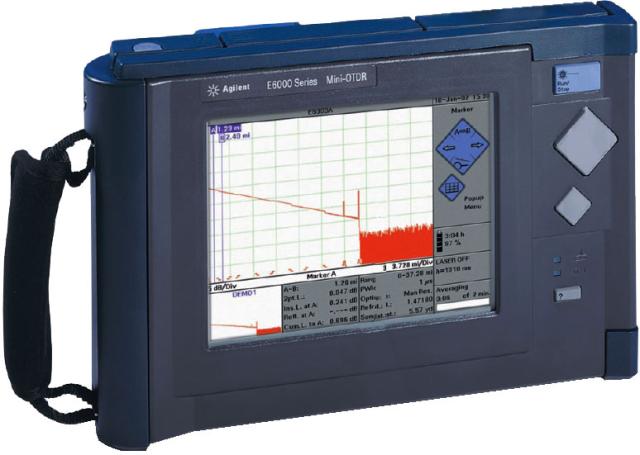
Agilent E6000C Mini-OTDR For Parts with no Accessories As Is
$530.00
OTDR
$0.00
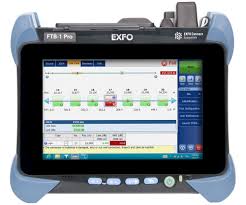
EXFO MaxTester 700 OTDR Series
$3,475.00
Exfo FTB-150 Network Testing Compact Optical OTDR
$3,270.00
Advantest Q8460A – OTDR Spectrum Analyzer
$1,057.00Yokogawa DLM5054HD High Definition Oscilloscope, 4-Channel, 500 MHz
$0.00Yokogawa AQ7275 Optical Time Domain Reflectometer
$4,770.00






What Is an OTDR and Why It Is Critical
An OTDR works by launching a series of optical pulses into a fiber and measuring the light that is scattered or reflected back toward the source. By analyzing the time delay and intensity of the returned signal, the OTDR constructs a distance-based loss profile of the fiber.
This method allows engineers to locate and quantify events along the fiber without requiring access to both ends of the link. OTDR testing is essential for verifying fiber quality, documenting installation integrity, and diagnosing failures with meter-level accuracy.
Unlike insertion loss testing, which provides only end-to-end loss, OTDRs reveal exactly where losses occur and why they occur.
OTDR Measurement Principles
OTDR operation is based on two primary optical phenomena:
• Rayleigh backscatter, which provides continuous attenuation measurement along the fiber
• Fresnel reflections, which occur at connectors, mechanical splices, and fiber discontinuities
By combining these effects, the OTDR produces a trace that maps optical power versus distance. Each event on the trace corresponds to a physical feature or impairment in the fiber.
Advanced OTDRs apply signal averaging, dynamic range optimization, and pulse width control to resolve closely spaced events while maintaining long-distance measurement capability.
Types of OTDRs We Offer
Singlemode OTDRs
Singlemode OTDRs are designed for long-haul, metro, and access networks operating at standard telecom wavelengths. They are optimized for low attenuation measurement and long fiber spans.
These OTDRs are commonly used for backbone networks, FTTH deployments, and carrier-grade infrastructure testing.
Multimode OTDRs
Multimode OTDRs support shorter-distance fiber links commonly found in data centers, enterprise networks, and industrial environments. They are optimized for larger core fibers and higher backscatter levels.
These OTDRs are essential for validating short-reach fiber installations and indoor cabling systems.
High-Resolution OTDRs
High-resolution OTDRs use short pulse widths and advanced detection to resolve closely spaced events. They are critical for testing dense fiber installations, patch panels, and high-connector-count links.
These instruments are commonly used in data centers and fiber manufacturing environments.
Long-Range and High Dynamic Range OTDRs
Long-range OTDRs are designed for testing extended fiber spans and high-loss links. They provide enhanced dynamic range and sensitivity for submarine, long-haul, and rural fiber networks.
Rack-Mounted and Laboratory OTDR Systems
Rack-mounted OTDRs are used in automated test systems, fiber production lines, and research laboratories. These platforms support high repeatability, remote control, and integration into larger test environments.
Key OTDR Parameters Engineers Evaluate
Selecting the correct OTDR requires careful evaluation of several performance characteristics:
• Dynamic range and measurement sensitivity
• Pulse width selection and resolution tradeoffs
• Event dead zone and attenuation dead zone
• Distance accuracy and spatial resolution
• Wavelength support and fiber compatibility
• Trace analysis and event table accuracy
• Automation, storage, and reporting capabilities
Proper alignment of these parameters is critical for accurate fiber characterization and fault isolation.
OTDR Applications That Drive Buying Decisions
OTDRs are used in a wide range of real-world scenarios that directly influence equipment selection:
• Fiber installation acceptance testing and certification
• Splice loss measurement and verification
• Connector reflectance analysis
• Fiber fault location and break detection
• Aging fiber assessment and maintenance planning
• Production testing of fiber assemblies
• Troubleshooting intermittent or high-loss links
Each application places different demands on dynamic range, resolution, and trace accuracy.
OTDR Brands We Sell
Aumictech supplies OTDRs from established manufacturers trusted in professional fiber-optic test environments.
• EXFO
OTDRs for access, metro, and long-haul fiber networks
• Anritsu
High-performance OTDRs for telecom and transport infrastructure
• Yokogawa
Laboratory-grade OTDR platforms for precision fiber analysis
• Viavi
Field and laboratory OTDR solutions for fiber deployment and maintenance
• Agilent Technologies
Legacy and laboratory OTDR systems used in research and manufacturing
Used and Laboratory-Grade OTDRs
OTDRs are long-life instruments and remain highly valuable well beyond their original production cycles. Professionally sourced used and surplus OTDRs provide a cost-effective solution for maintaining test capability, supporting legacy networks, and expanding lab infrastructure.
These instruments are commonly used in telecom labs, data centers, fiber manufacturing facilities, and university research environments.
Why OTDRs Are Non-Negotiable in Fiber Networks
Modern fiber networks demand precise visibility into every meter of optical infrastructure. Small losses, reflections, or bends can compound into major system failures if left undetected.
OTDRs provide unmatched insight into fiber health, enabling proactive maintenance, faster fault resolution, and long-term network reliability. From initial deployment to decades-long operation, OTDRs remain one of the most critical tools in fiber-optic engineering.