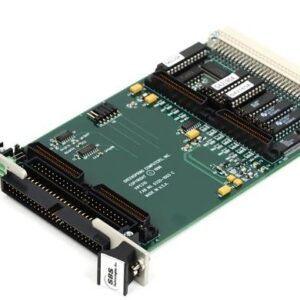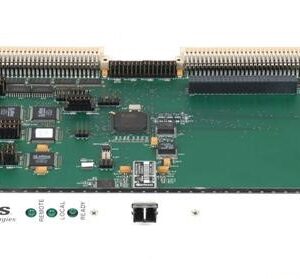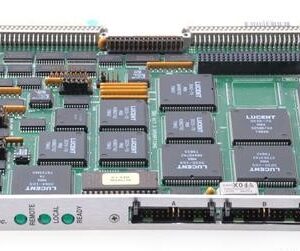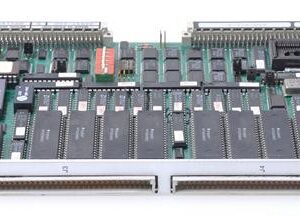

The Abaco Systems / VMIC VMIVME-2128-011 is a 128-bit high-voltage digital output board for VMEbus systems. It delivers 128 channels of high-voltage and high-current sink outputs using open collector drivers rated for 5 to 48 VDC operation. Each channel sinks up to 600 mA, with a 55 V breakdown voltage rating. Built-in-Test logic enables software-controlled verification of individual channel functionality. The board integrates automatic surge current shutdown, thermal shutdown protection, and output clamp diodes for inductive flyback suppression.
– Technical Specifications
• 128 output channels
• Output voltage range: 5 to 48 VDC (I/O range: 5 to 55 VDC)
• Maximum breakdown voltage: 55 V
• Current sink capability: 600 mA per channel
• Open collector output drivers
• Data transfer support: 8, 16, 32-bit operations
• VMEbus compliance: ANSI/IEEE STD 1014-1987, IEC 821 and 297
• Form factor: 6U (A24:A16:D32/D16/D08 EO slave)
• High-voltage buffered front-panel I/O interface
– Key Features
• Built-in-Test logic for per-channel software verification
• Automatic surge current shutdown protection
• Thermal shutdown protection
• Output clamp diodes for inductive load transient suppression
• Fail LED indicator on front panel
• Warming resistor sockets for user-supplied components
• Optional pull-up resistors for electronic switch outputs
• Eight 16-bit bi-directional dual-port latches with CSR control register
• High-speed DTACK generator for optimized data transfer rates
– Typical Applications
• Industrial control and equipment automation
• Test and instrumentation systems requiring high-voltage digital switching
• Multi-channel relay and solenoid driver applications
• Flight test and telemetry systems
– Compatibility & Integration
VMEbus interface supports A24, A16, and D32/D16/D08 data transfers in short or standard I/O memory space with supervisory and non-privileged access modes. Compatible with Intelligent I/O Controllers. Address selection via A4, A3, A2, A1 bits and data strobes. The VME-2128A serves as a form, fit, and function replacement, entering Restricted Production Phase on September 30, 2025.