


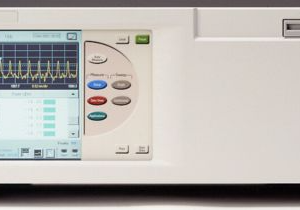
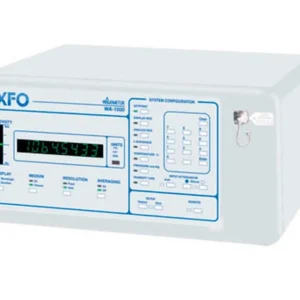
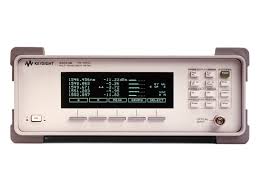
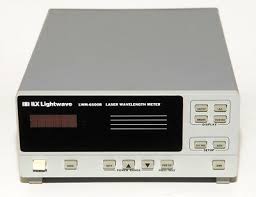
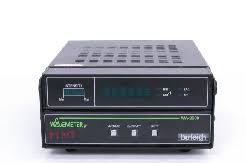
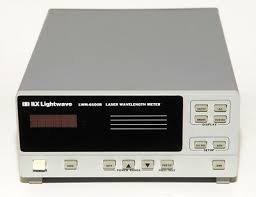
The Advantest TQ8325 Digital Optical Wavelength Meter is a precision benchtop instrument for high-accuracy measurement of optical signal wavelengths across visible to near-infrared bands. Built around a He-Ne laser standard, it employs Michelson interferometry to characterize central emitted wavelengths from laser diodes, LEDs, and modulated optical sources. The meter delivers wavelength and frequency readout simultaneously, with a dedicated deviation measurement function to track wavelength drift relative to a stored reference. Auto-resolution automatically optimizes measurement resolution based on the half-value width of the input signal, while AVG mode averages 10 consecutive measurements for noise reduction.
– Technical Specifications
Measurement Range & Accuracy
• Wavelength Range: 480 nm to 1000 nm (short band); 1000 nm to 1600 nm (long band)
• Measurement Accuracy: 5 ppm
• Wavelength Resolution: 0.001 nm
• Frequency Resolution: 100 MHz
• Sampling Rate: 5 times/second
• Measurement Time: 200 ms
Optical Input
• Connector: FC type
• Input Fiber: 9/125 µm single-mode
• Maximum Input Level: −15 dBm to +3 dBm (480–1000 nm); −23 dBm to +3 dBm (1000–1600 nm)
Signal Capabilities
• Intensity-modulated light measurement at modulation rates ≥3 MHz
• Wavelength and frequency display modes
• Deviation measurement against reference wavelength
Interfaces & Output
• GPIB interface
• Analog output: 0 to +1 V (lowest 3 digits)
• 7-segment LED display
Physical & Environmental
• Dimensions: 300 mm (W) × 132 mm (H) × 450 mm (D)
• Mass: ≤12 kg
• Operating Temperature: 0°C to +40°C
• Operating Humidity: ≤85% RH
– Key Features
• He-Ne laser standard ensures long-term measurement stability
• Michelson interferometry method enables sub-nanometer resolution
• Auto-resolution adapts to input signal characteristics
• Moving-average mode suppresses measurement noise
• Dual wavelength and frequency display for system flexibility
• FC connector accommodates standard single-mode fiber
– Typical Applications
• Optical transceiver and module characterization
• Laser diode wavelength verification and stability monitoring
• LED spectral analysis in communications systems
• Wavelength drift detection under thermal stress
• Modulated signal source characterization
– Compatibility & Integration
GPIB connectivity enables automated test sequences and remote instrument control. Analog output allows real-time wavelength trending on external data acquisition hardware.










Reviews
There are no reviews yet.