


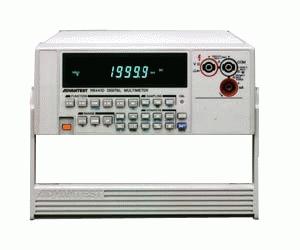
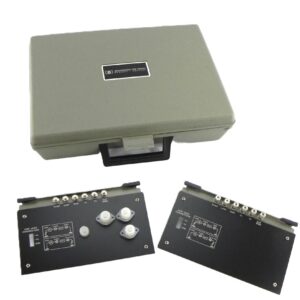
The Fluke 845AB is a precision high-impedance DC voltmeter and null detector engineered for sensitive voltage measurements in laboratory, research, and critical circuit testing environments. It combines a wide measurement range of 1 µV to 1000 V DC across 19 ranges with exceptional input impedance to minimize circuit loading and deliver accurate readings. The instrument functions as both a precision voltmeter and null detector with 0.1 µV/V sensitivity, making it ideal for applications requiring detection of small voltage changes or null conditions in bridge circuits and similar setups.
– Technical Specifications
• Measurement Range: 1 µV to 1000 V DC, 19 ranges
• Null Detector Sensitivity: 0.1 µV/V
• Accuracy: ±(2% of end scale + 1 µV)
• Input Resistance: 100 MΩ (300 mV range and above); 10 MΩ (100 mV range and below)
• Input Isolation: Better than 10¹² Ω
• DC Common Mode Rejection: Better than 160 dB
• AC Normal Mode Rejection (60 Hz and above): 60 dB above end scale produces less than 2% of end scale error
• AC Common Mode Rejection (below 100 kHz): 120 dB or 100 V rms, whichever is less, produces less than 2% of end scale error
• Maximum Meter Noise: 0.20 µV (1 µV and other ranges); 0.25 µV (3 µV range)
• Response Time to 90% Reading: 1.5 to 5 seconds depending on range
• Zero Stability: Better than 0.15 µV/hour; better than 0.3 µV/day
• Temperature Coefficient of Zero: Less than 0.1 µV/°C (15°C to 35°C); less than 0.2 µV/°C (0°C to 50°C)
• Overload Protection: Up to 1100 V DC on any range
– Key Features
• Recorder output: 0–1 V DC, 5 kΩ to 7.5 kΩ source impedance, 0.5% linearity
• Configurable as DC amplifier with maximum gain of 120 dB
• Zero control range: ±5 µV minimum
• Dual-power operation: 115/230 VAC ±10%, 50 to 440 Hz, or rechargeable battery
• Battery runtime: Approximately 40 hours per full charge
• Full recharge time: 16 hours
• Power consumption during recharge: Approximately 6 watts
• Trickle-charge capability during line operation
– Typical Applications
• Bridge balance and null detection
• Thermoelectric measurements
• Potentiometric circuits
• High-impedance sensor readout
• Standards calibration and verification
• Research applications requiring sub-microvolt sensitivity




Reviews
There are no reviews yet.