


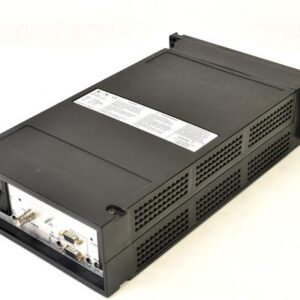
The Inficon/Leybold ITR 100 is a dual-sensor ionization vacuum gauge engineered for precision pressure measurement across ultra-high and atmospheric ranges. It combines a hot cathode ionization sensor using the Bayard-Alpert method with a Pirani sensor, delivering continuous readings from 5 × 10⁻¹⁰ mbar to atmospheric pressure. The sensor is bakeable to 150 °C for UHV applications and outputs a 0–10 VDC analog signal proportional to the logarithm of pressure. Designed for integration with the Center One controller series, the ITR 100 provides reliable vacuum monitoring in industrial and research environments where accuracy and wide dynamic range are critical.
## Technical Specifications
• **Measurement Principle:** Hot cathode ionization (Bayard-Alpert) combined with Pirani sensor
• **Pressure Display Range:** 5 × 10⁻¹⁰ to 1000 mbar (air, O₂, CO, N₂)
• **Hot Cathode Ionization Range:** 5.5 × 10⁻³ mbar
• **Mixed Signal Overlap:** 2.0 × 10⁻² to 5.5 × 10⁻³ mbar
• **Accuracy:** 15% of reading after 5 minutes stabilization
• **Repeatability:** 5% of reading after 5 minutes stabilization
• **Maximum Bakeout Temperature:** 150 °C (electronics removed or extension installed above 50 °C)
• **Filament Type:** Single hot cathode; degas mode available to extend filament life
## Key Features
• 0–10 VDC logarithmic analog output
• RS232C digital interface; DeviceNet and Profibus variants available
• Power supply: +14 to +30 VDC (nominal 24 VDC)
• Degas control input: active high +24 VDC, < 3 seconds duration
• Vacuum connections: DN 25 ISO-KF, DN 40 CF-R, or 2.75" CF flange options
• Compact bench-top enclosure
## Typical Applications
UHV process monitoring, research vacuum systems, and industrial leak detection. Not suitable for flammable or combustible gas mixtures containing oxidants, or dirty and corrosive environments.
## Compatibility & Integration
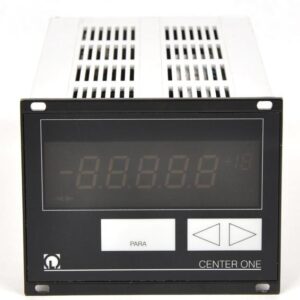
Operates with Inficon/Leybold Center One single-channel controller and compatible Pfeiffer Vacuum controllers. Multiple flange configurations and fieldbus options support diverse system architectures.





Reviews
There are no reviews yet.