


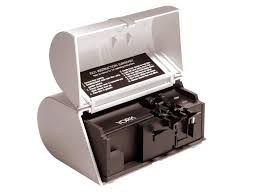
The Keysight 11050A Thermal Converter is a precision AC-to-DC converter designed as a primary standard for AC-DC transfer measurements in calibration laboratories and metrology applications. It converts AC input signals into a proportional DC voltage representing the RMS value of the input, delivering nominal 7.5 mV output at full scale. The instrument provides exceptionally flat frequency response from 5 Hz to 10 MHz and extends to 100 MHz with calibration options.
– Technical Specifications
Frequency Response & Accuracy
• 5 Hz to 20 Hz: ±0.05% (with reference to standard: ±0.12%)
• 20 Hz to 20 kHz: ±0.01% (with reference to standard: ±0.02%)
• 20 kHz to 50 kHz: ±0.01% (with reference to standard: ±0.03%)
• 50 kHz to 1 MHz: ±0.01% (with reference to standard: ±0.06%)
• 1 MHz to 10 MHz: ±0.05% (with reference to standard: ±0.12%)
• 10 MHz to 30 MHz: ±0.25%
• 30 MHz to 60 MHz: ±0.50%
• 60 MHz to 100 MHz: ±1.50%
Electrical Parameters
• Maximum input voltage: 1 V RMS
• Input impedance: 50 Ω ±0.15 Ω (to 10 MHz)
• Output impedance: <10 Ω
• Output voltage (full scale): 7.5 mV nominal
Calibration Options
• Option 01: Calibration to 60 MHz with correctional data 5 Hz to 60 MHz
• Option 02: Calibration to 100 MHz with correctional data 5 Hz to 100 MHz
– Key Features
Essentially flat response from 5 Hz to 10 MHz ensures minimal distortion across the audio and RF spectrum. Extended frequency operation to 100 MHz (with appropriate calibration option) accommodates modern signal analysis requirements. Low output impedance allows direct connection to precision measurement instruments without loading effects.
– Typical Applications
• AC-DC transfer calibration standards
• Primary reference for precision AC voltmeters
• Frequency response verification for oscilloscopes and amplifiers
• Metrology-grade AC voltage measurement
– Compatibility & Integration
The 11050A integrates with precision AC voltmeters, oscilloscopes, and amplifiers for response verification. Part of the 11049A/11050A/11051A thermal converter series. This model is discontinued; archived documentation available from 1984.










Reviews
There are no reviews yet.