


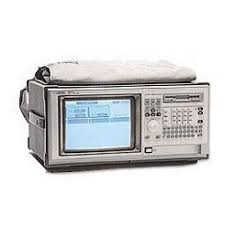
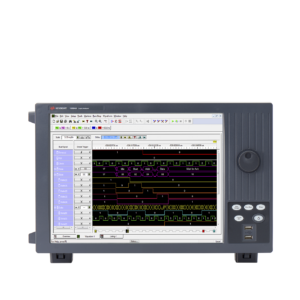
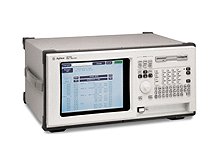
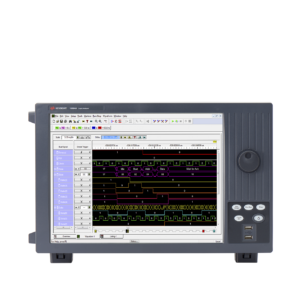
The Keysight (Agilent) 1680AD is a standalone logic analyzer built for real-time capture and analysis of complex digital signals in embedded systems, ASICs, and digital designs. The integrated 10.4″ or 12.1″ color LCD display and embedded GUI eliminate the need for external PC dependency during basic operation. Engineers gain access to advanced triggering, state and timing analysis modes, and protocol decode capabilities—all from a self-contained instrument.
– Technical Specifications
Acquisition Architecture
• Channel count: up to 136 channels
• Memory depth (Conventional Timing): 2 M or 4 M samples per channel
• Memory depth (Transitional Timing): 1 M samples per channel
• Memory depth (State Analysis): 1 M samples per channel
• Conventional Timing sample rate: 800 MHz (half-channel), 400 MHz (full-channel)
• Transitional Timing sample rate: 200 MHz
• State Analysis sample rate: 200 MHz
• Timing zoom: 4 GHz with 250 ps resolution
Display & Computing
• Integrated color LCD: 10.4″ or 12.1″
• Embedded operating system with graphical interface
Data Capture & Storage
• Hard drive: 40 GB minimum for setups and results
• Floppy drive: 1.44 MB (3.5-inch)
• Network interface: 10/100Base-T LAN
• Additional connectivity: USB, GPIB (option-dependent)
– Key Features
• Advanced trigger recall—save and reuse complex trigger configurations
• State analysis with inverse assembler support for processor mnemonics and bus transactions
• Timing analysis using internal clock for extended, high-resolution measurement periods
• Protocol analysis: I2C, SPI, and parallel bus support
• View Scope: time-correlated logic analyzer and oscilloscope data display
• Eye Finder: automatic threshold and sample position configuration
– Typical Applications
Embedded system debugging, ASIC validation, microprocessor bus cycle capture, multi-protocol signal analysis, and high-speed timing measurements requiring sub-nanosecond resolution.
– Connectivity & Integration
LAN connectivity enables result sharing and PC storage without external PC requirement for standalone operation. USB and GPIB interfaces (where available) support laboratory integration workflows.












Reviews
There are no reviews yet.