


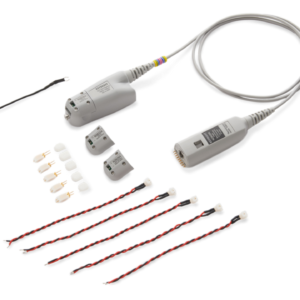
The Keysight (Agilent) CX1105A Differential Sensor is a high-performance accessory for the CX3300 series Device Current Waveform Analyzer, delivering precise dynamic current measurements across a wide dynamic range. This differential sensor measures voltage across existing shunt resistors on test boards, converting those measurements into current waveforms within the CX3300 mainframe. The result is non-intrusive current profiling leveraging hardware already present in your test setup.
Designed for noise performance, the CX1105A captures current dynamics from 1 μA to 100 A with measurement bandwidth extending to 100 MHz. Engineers rely on this sensor for detailed power integrity analysis of Power Delivery Networks (PDN) across IoT, mobile, and automotive devices.
– Technical Specifications
• Current Measurement Range: 1 μA to 100 A
• Measurement Bandwidth: Up to 100 MHz
• Common Mode Voltage Range: Up to ±40 V or ±6 V
• Noise Performance: Industry-lowest-noise differential sensing
• Connection Method: Non-intrusive DUT connection via mini jack terminals
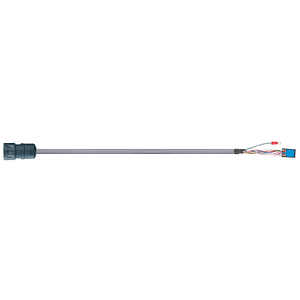
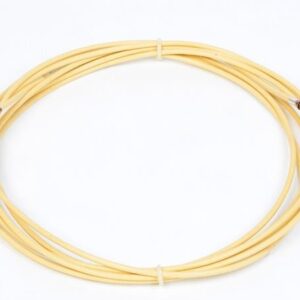
• Supplied Cables: Shielded twist pair cables for voltmeter connections
– Key Features
• Low-noise differential sensing enables detection of sub-microvolt signals across shunt resistors
• Operates with existing board-level shunt resistors—no additional current path required
• Wide common mode voltage accommodation (±40 V or ±6 V) suits diverse supply domains
• Grounding terminal (mini banana jack) connects to extension cable shielding or earth ground near DUT
• Furnished shielded cables minimize external noise coupling
– Typical Applications
• Power Delivery Network (PDN) characterization and optimization
• Device current profiling in mobile and IoT platforms
• Automotive system power integrity assessment
• Dynamic current waveform analysis across wide amplitude ranges
– Compatibility & Integration
The CX1105A is a dedicated accessory for the Keysight CX3300 series Device Current Waveform Analyzer. Integration via mini jack terminals provides straightforward connection to the mainframe’s voltmeter inputs.








Reviews
There are no reviews yet.