

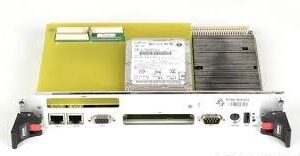
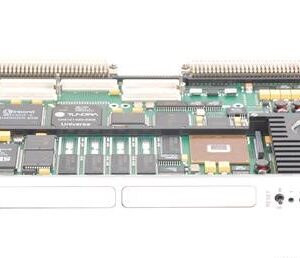
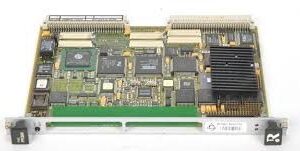
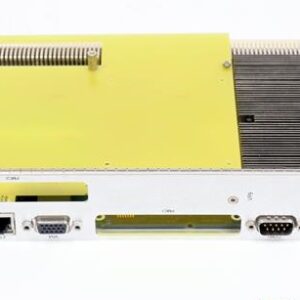
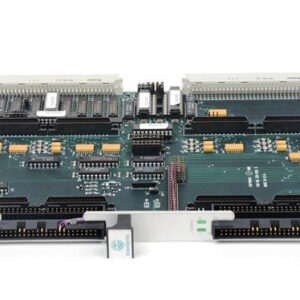
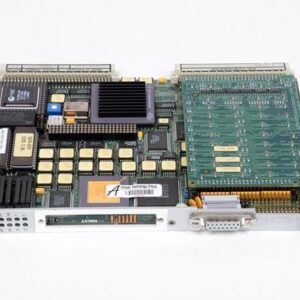
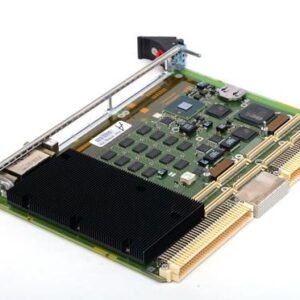
The Mercury Computer Systems/Themis USPIIe-USB/2048-650-PS2 is a 6U VMEbus single-board computer built around the Sun Microsystems 64-bit UltraSPARC IIi processor. This high-performance embedded platform delivers clock speeds of 550 MHz, 600 MHz (down-clocked variant), or 650 MHz, making it suitable for demanding real-time and data-intensive applications. The board integrates a local PCI bus (PMC) peripheral controller slot with VME64 connectivity and supports 64-bit Solaris 8 and Solaris 9 operating systems, providing access to mature Solaris software ecosystems.
– Technical Specifications
• Processor: Sun Microsystems UltraSPARC IIi (64-bit RISC)
• Clock Speeds: 550 MHz, 600 MHz (down-clocked), or 650 MHz
• Error Correction: 8-bit ECC
• Watchdog Timers: Three 22-bit watchdog timers
• Operating Systems: 64-bit Solaris 8, 64-bit Solaris 9
• Expansion: One local PCI bus (PMC) peripheral controller slot
• VME Configuration: One-slot, two-slot, or three-slot variants available
– Key Features
• VME64 bus interface for scalable system integration
• USB connectivity integrated into board design
• 8-bit ECC memory protection for data integrity
• Three independent 22-bit watchdog timers ensure system reliability
• Multiple slot configurations enable flexible I/O expansion and system architecture optimization
– Typical Applications
This SBC targets embedded systems requiring sustained 64-bit RISC computing with VMEbus modularity. Common deployment scenarios include real-time data acquisition, signal processing, industrial control, and aerospace/defense systems where Solaris software stacks and VME backplane integration are required.
– Compatibility & Integration
The USPIIe-USB/2048-650-PS2 interfaces directly with VME64 backplanes and accommodates PMC modules through its integrated PCI peripheral controller slot. Full support for Solaris 8 and Solaris 9 environments ensures access to established development tools, embedded libraries, and commercial off-the-shelf applications. The board’s multi-slot availability allows integration into single-crate or distributed computing architectures.




Reviews
There are no reviews yet.