

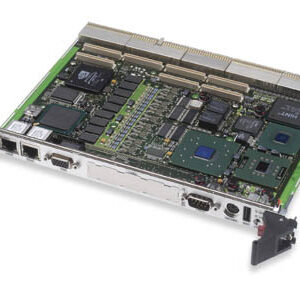
The NI PXI-8170 is a 3U PXI/CompactPCI embedded controller that delivers high-performance computing within modular instrumentation systems. Built on an Intel Pentium III processor, it integrates directly into PXI chassis while preserving full PCI bandwidth for peripheral modules. The controller combines processing power with flexible I/O and memory expansion, supporting Windows 98 and Windows NT operating systems along with LabVIEW and LabWindows/CVI development environments.
– Technical Specifications
Processor & Memory
• Intel Pentium III: 450 MHz or 700 MHz variants with MMX technology
• 32-bit internal architecture with 16K/16K L1 cache
• L2 cache: 512 KB (450 MHz) or 256 KB advanced transfer cache (700 MHz)
• Standard 64 MB SDRAM at 100 MHz; expandable to 256 MB maximum
• Two 144-pin SO-DIMM sockets accept 10 ns SDRAM modules
• Intel BX chipset architecture
Storage & Graphics
• Internal 4 GB minimum enhanced IDE hard drive
• 3.5-inch 1.44 MB floppy drive
• Integrated Super VGA with 2 MB SGRAM/DRAM and AGP support
Connectivity
• Direct PXI/CompactPCI interface: 132 Mbytes/s PCI bandwidth preserved
• AGP port: 266 Mbytes/s bus speed
• PCI local bus: 132 Mbytes/s maximum throughput
• Front panel: 15-pin D-sub VGA, RS-232 serial, IEEE 1284 parallel, PS/2 keyboard/mouse, USB
• Master/slave capability across all seven PXI slots plus system slot control
– Key Features
• Compact 3U form factor: 8.1 cm × 13 cm × 21.6 cm
• User-accessible memory expansion without chassis removal
• Full PXI backplane integration without bridge logic bottlenecks
• Windows 98 or Windows NT pre-installed
• Compatible with NI-VISA and NI-488.2M driver software
– Typical Applications
Data acquisition systems, automated test equipment, industrial control platforms, and modular measurement solutions requiring embedded processing within PXI architectures.
– Compatibility & Integration
Designed for PXI-1020 and PXI-1025 chassis. Supports PC-based software tools and National Instruments application frameworks. Peripheral expansion via PCI and AGP ports enables integration of graphics accelerators and additional interface modules.










Reviews
There are no reviews yet.