

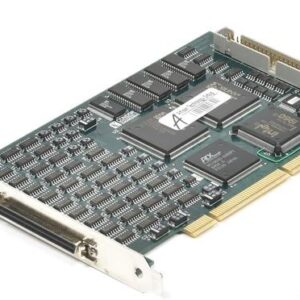
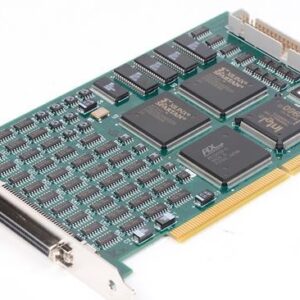
The Ribbon/Performance Technologies CPC5565 is a high-performance single-board computer engineered for deterministic, low-latency data sharing across distributed systems. Built around a Reflective Memory (RFM) network architecture, the CPC5565 enables real-time communication between up to 256 independent nodes with optical connectivity and software-transparent data distribution—eliminating I/O overhead and synchronization delays common in traditional architectures.
– Technical Specifications
Reflective Memory Network
• Transfer rate: Up to 170 Mbyte/s (64-byte packets); minimum 43 Mbyte/s (4-byte packets)
• Packet size: Dynamic, 4 to 64 bytes
• Node-to-node latency: 450–500 nanoseconds
• Serial connection speed: 2.12 Gbaud
• SERDES clock: 106.25 MHz
• Fiber-optic data path: Multimode fiber to 300 m; single-mode fiber to 10 km
• Network capacity: 256 nodes per ring topology
• Interrupts: Single-command broadcast to any node or all nodes
Memory & Processing
• SDRAM: 128 Mbyte or 256 Mbyte onboard
• DMA: One independent channel
• Transmit/Receive FIFOs for peak-rate buffering
• Improved PIO read performance versus earlier models
Interfaces & Integration
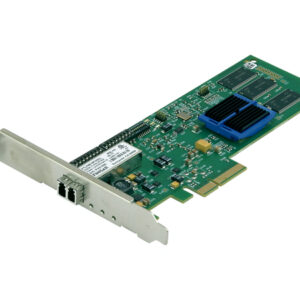
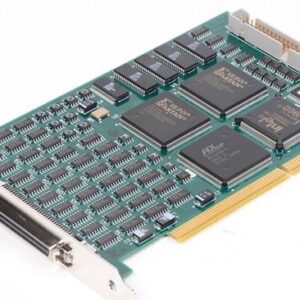
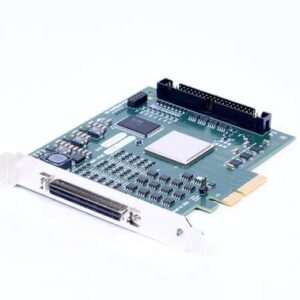
• Form factor: PCI (32/64-bit at 33/66 MHz); PCI Express variant (PCIE-5565RC) available
• RX/TX ports with configurable PCI latency timer for bus mastering
System Features
• Integrated error detection and redundant transfer mode
• Field-upgradable firmware
• RoHS compliant
• Operating temperature: 0°C to +65°C (PCIE-5565RC with forced air cooling)
– Key Features
Optical ring-based shared memory eliminates contention and enables deterministic performance. Data written to any node propagates to all others without application intervention. Supports Linux, VxWorks, and Windows across single-board and PCI Express deployments.
– Typical Applications
Distributed control systems, high-frequency trading platforms, real-time sensor networks, mission-critical telecommunications, and synchronized industrial automation requiring sub-microsecond latency.
– Compatibility & Integration
PCI and PCI Express form factors integrate into standard computing platforms. Fiber-optic connectivity scales from local cabinet deployments (300 m multimode) to campus-wide networks (10 km single-mode).










Reviews
There are no reviews yet.