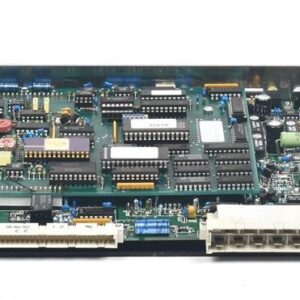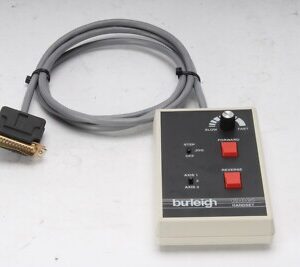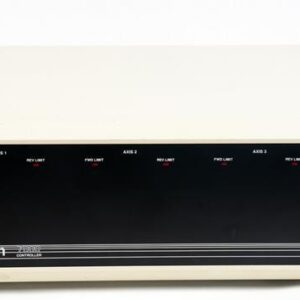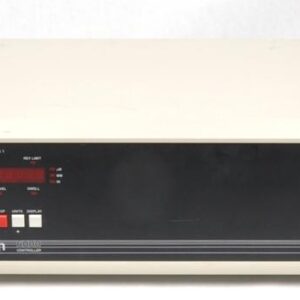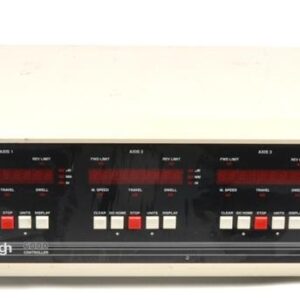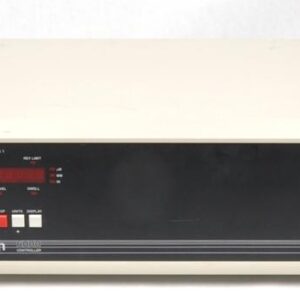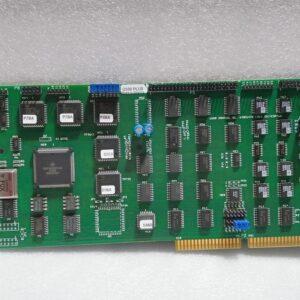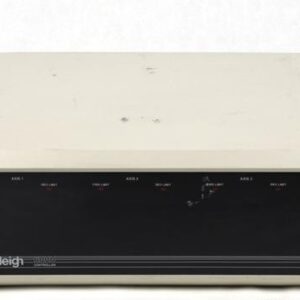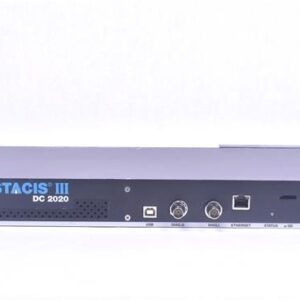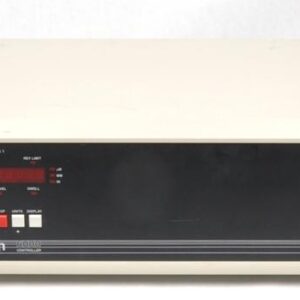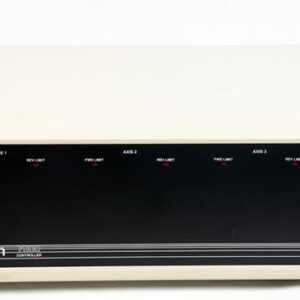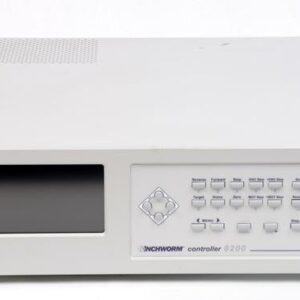

The Vincent/UniBlitz D122 Shutter Driver is an electronic control unit engineered to operate all UniBlitz shutters at maximum repetition rates. It delivers precise exposure control through multiple operational modes and flexible input/output connectivity, making it suitable for microscopy, laser systems, and scientific imaging applications where timing accuracy and shutter synchronization are critical.
Technical Specifications
Operational Modes
• Standard Operation (STD): External pulse source or switch contact closure determines exposure
• Line Interrupt (A): Unit powers down upon AC loss; manual reset required
• DC Interrupt (B): Detects external switch contact break; manual reset required upon continuity restoration
Shutter Configuration
• Supports normally closed (NC) and normally open (NO) configurations
• Optimized for 10 ms exposure; higher frequencies supported with potential opening speed reduction due to pulse voltage adjustment for thermal compensation
Input Specifications
• External Pulse Input (BNC): 10 kΩ impedance, active-low logic, 500 µA source current, +5 VDC maximum, +3.5 VDC minimum, rising/falling edge triggering
• Control #2 Pulse Input (D122): 4.7 kΩ impedance, +5 VDC maximum, +3.5 VDC minimum
• Reset Input (BNC): 10 kΩ impedance, active-low logic, 500 µA source current, 100 µs minimum pulse, +5 VDC maximum, 25 msec pulse required for D122
• Pulse O/C Input (BNC): 10 kΩ impedance, active-low logic, 500 µA source current, 300 µs minimum activation pulse, +5 VDC maximum
• Interrupt In (Control #4): 330 Ω impedance, active-high logic, +8.0 VDC required
• RS-232C: Computer control interface
Output Specifications
• Pulse Output (BNC): Active-low logic, +4 VDC maximum, 470 Ω source impedance, 10 mA maximum source and sink current, duration determined by exposure or input pulse; supports daisy-chaining
• Sync Output (BNC): Synchronization output
– Key Features
• Multiple triggering modes accommodate diverse system architectures
• Dual shutter configuration support (NC/NO) eliminates hardware redesign
• Daisy-chain capability enables multi-unit synchronization
• Manual reset control for interrupt modes ensures safe operation recovery
– Typical Applications
Microscopy systems, laser synchronization circuits, high-speed imaging platforms, and scientific instrumentation requiring precise shutter timing and external pulse coordination.