

RF Power Meters
Showing 121–132 of 160 results

Boonton 4500B RF Peak Power Analyzer
$0.00
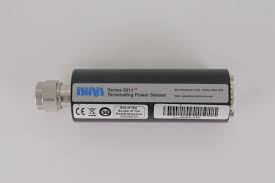
Bird 5011
$0.00
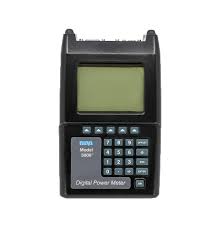
Bird 5000-EX
$0.00
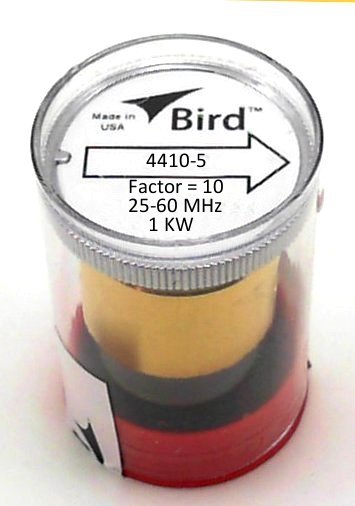
Bird 4410-5
$0.00
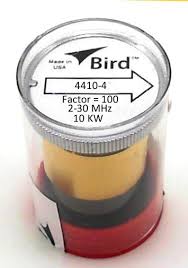
Bird 4410-4
$0.00
Bird 4410-2
$0.00
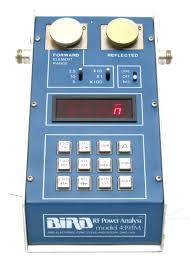
Bird 4391M
$0.00
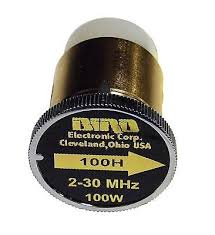
Bird 100H
$0.00
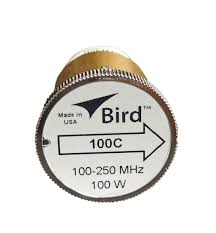
Bird 100C
$0.00
Ballantine 10600D
$0.00
Anritsu MA9302A
$0.00
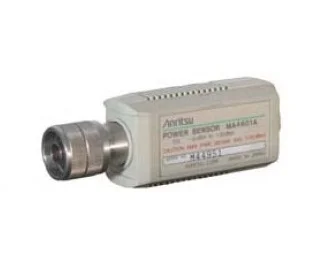
Anritsu MA4601A
$0.00



RF Power Meters
RF power meters are precision instruments used to measure the absolute power of radio frequency and microwave signals with high accuracy and repeatability. In professional RF environments, power measurement is one of the most fundamental and trusted indicators of system performance. At Aumictech, RF power meters are treated as primary measurement instruments, not secondary indicators, because accurate power data underpins nearly every RF validation and calibration process.
Unlike relative measurements taken from spectrum analyzers or receivers, RF power meters provide traceable and direct power readings. This makes them essential in applications where accuracy, repeatability, and confidence in measurement results are required. From laboratory research to production testing and calibration services, RF power meters serve as the reference point for RF signal verification.
Role of RF Power Meters in RF Systems
RF power meters are used to measure output power from signal generators, amplifiers, transmitters, and RF modules. They verify that devices are operating within specified power limits and help detect drift, compression, or instability in RF systems.
In calibration workflows, power meters are used to establish reference levels and validate signal source accuracy. They are also critical when characterizing RF components such as attenuators, couplers, filters, and amplifiers, where accurate power readings are required to determine gain, loss, and efficiency.
In production environments, RF power meters support go or no-go testing, final validation, and quality control by providing fast and reliable power measurements across multiple test stations.
Key Performance Characteristics
Measurement accuracy is the most critical parameter for RF power meters. High-quality meters provide consistent readings across their specified frequency and power ranges, enabling trustworthy results in demanding applications.
Dynamic range defines the span of power levels the meter can measure accurately, from very low signal levels to high-power outputs. Wide dynamic range is especially important when testing both sensitive receivers and high-power transmitters.
Frequency response determines how accurately the power meter measures signals across different frequencies. Flat and predictable frequency response is essential for broadband testing and swept-frequency measurements.
Response time affects how quickly the meter can capture changes in signal power. Fast response is important in pulsed RF applications and automated test systems where timing and throughput matter.
Temperature stability plays a key role in maintaining accuracy over extended periods. Professional RF power meters are designed to minimize thermal drift and provide stable performance in controlled and semi-controlled environments.
Types of RF Power Meters
Average power meters are used for continuous wave and modulated signals where mean power is the primary parameter of interest. These meters are widely used in calibration, system verification, and general RF testing.
Peak power meters are designed to capture fast-changing signals, including pulsed and burst transmissions. They are essential for applications involving radar, wireless communication bursts, and time-domain RF analysis.
Thermal power meters provide highly accurate measurements by converting RF energy into heat. They are often used as reference standards in calibration laboratories due to their stability and traceability.
Diode-based and sensor-based power meters offer fast response and wide dynamic range, making them suitable for production testing and automated measurement systems.
Design and Measurement Considerations
RF power meters rely on precision sensors that directly interact with the RF signal. Sensor design, calibration quality, and connector integrity all influence measurement accuracy. Proper sensor selection is critical to ensure compatibility with frequency range, power level, and signal type.
Cable quality, connector condition, and impedance matching also affect power measurements. Professional RF environments require consistent handling practices and well-maintained interfaces to preserve measurement integrity.
Modern RF power meters often integrate digital processing and interface options that support automated testing, data logging, and system integration without compromising measurement accuracy.
Applications Across Industries
RF power meters are used across telecommunications, aerospace and defense, semiconductor manufacturing, and research institutions. They support transmitter validation, amplifier testing, antenna characterization, and regulatory compliance testing.
Calibration laboratories rely on RF power meters as reference instruments to establish traceable power levels. Production environments use them to maintain consistency and quality across large volumes of RF devices.
Field engineers use RF power meters to verify system performance, troubleshoot power issues, and validate installations in real-world operating conditions.