
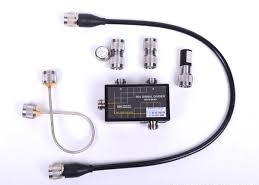
RF Test Accessories
Showing 889–900 of 1072 results

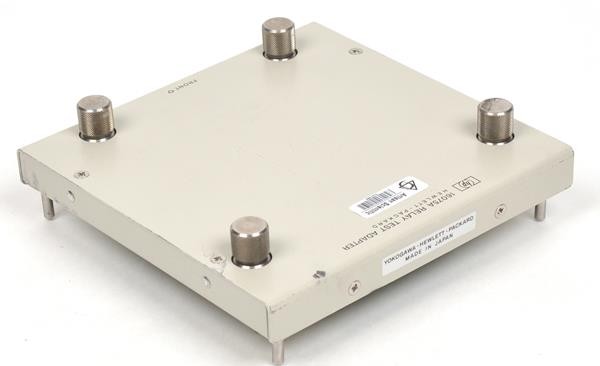
Agilent/Keysight 16076A
$659.00
Agilent/Keysight 16075A
$509.00
Agilent/Keysight 16071A
$0.00
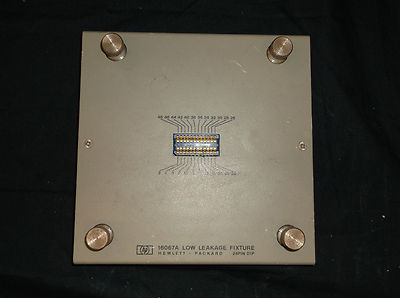
Agilent/Keysight 16067A
$739.00
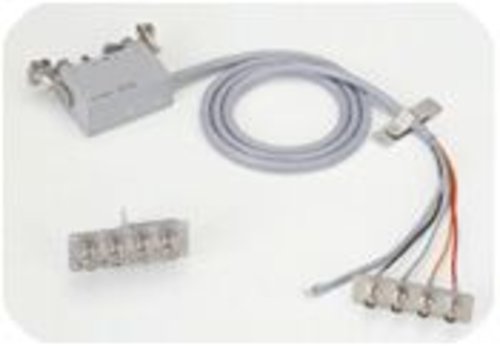
Agilent/Keysight 16066A
$739.00
Agilent/Keysight 16065A
$279.00
Agilent/Keysight 16048H
$419.00
Agilent/Keysight 16048G
$419.00
Agilent/Keysight 16048E
$419.00
Agilent/Keysight 16047D
$419.00
Agilent/Keysight 16047C
$540.00
Agilent/Keysight 16047B
$419.00





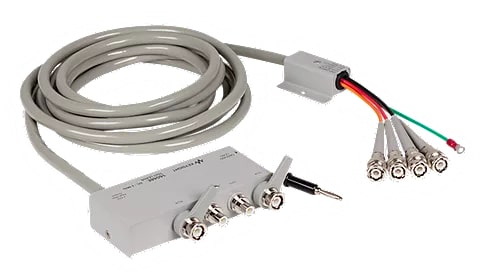

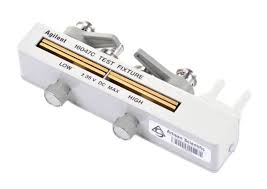
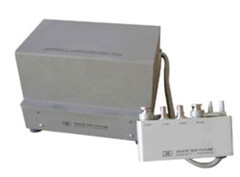
RF Test Accessories
RF test accessories include the supporting components that make accurate, repeatable, and reliable RF measurements possible. While primary RF instruments receive most of the attention, accessories are the elements that connect, condition, protect, and stabilize RF signal paths. At Aumictech, RF test accessories are treated as performance-critical components because the quality of accessories directly impacts the accuracy of every RF measurement.
In professional RF environments, accessories are not optional add-ons. Cables, adapters, terminations, fixtures, and protective components all play a role in preserving signal integrity and minimizing measurement uncertainty. Poor-quality accessories can introduce loss, mismatch, noise, and variability that mask true system performance.
Role of RF Test Accessories in RF Systems
RF test accessories provide the physical and electrical interface between RF instruments and devices under test. They enable proper signal delivery, measurement access, and system protection across laboratory, production, and field applications.
In test and measurement setups, accessories ensure consistent impedance, controlled signal levels, and reliable connections. They also protect sensitive instruments from excessive power, reflections, and electrostatic discharge.
In automated test systems, RF accessories support repeatability and throughput by reducing connection variability and minimizing manual handling. In calibration environments, they help establish stable reference conditions that support traceable measurements.
Key Performance Characteristics
Impedance consistency is critical across all RF accessories. Any deviation from the intended impedance can introduce reflections, standing waves, and measurement errors.
Insertion loss and phase stability affect signal accuracy, especially in high-frequency and broadband applications. Accessories used in precision environments must maintain predictable behavior across frequency.
Mechanical integrity influences long-term reliability. Connectors, cables, and fixtures must withstand repeated use without degradation in electrical performance.
Power handling capability determines whether an accessory can safely operate in high-power RF environments without overheating or failure.
Shielding effectiveness is important for preventing external interference and signal leakage, particularly in sensitive measurement setups.
Types of RF Test Accessories
RF cables provide the primary signal path between instruments and devices. High-quality cables maintain stable electrical characteristics and minimize loss and phase variation.
Adapters and connectors enable compatibility between different RF interfaces while preserving impedance and minimizing reflections.
RF terminations and dummy loads provide matched loads for testing, calibration, and system stabilization.
Attenuators and protective accessories help control signal levels and prevent damage to sensitive instruments.
Test fixtures and interface blocks support repeatable device connections in production and characterization environments.
Calibration accessories support reference measurements and maintain traceability within RF systems.
Design and Quality Considerations
RF test accessories are designed with precise mechanical and electrical tolerances to ensure consistent performance. Materials, connector geometry, and assembly quality all influence electrical behavior at RF and microwave frequencies.
Thermal stability is an important consideration, as temperature changes can affect cable length, connector resistance, and overall signal integrity.
Durability is essential in environments where accessories are frequently connected and disconnected. High-quality construction helps maintain performance over extended service life.
Proper labeling, documentation, and compatibility information also contribute to efficient system integration and reduced setup errors.
Applications Across Industries
RF test accessories are used across telecommunications, aerospace and defense, semiconductor manufacturing, and research laboratories. They support everything from basic signal routing to advanced system characterization and compliance testing.
Calibration laboratories rely on stable accessories to maintain reference conditions and ensure traceable measurements. Production environments depend on consistent accessories to standardize test results across multiple stations.
Field engineers use RF accessories to connect, protect, and verify RF systems in real-world operating conditions.