

RF Transceivers & Test Sets
Showing 49–60 of 130 results

HP / Agilent 11694A Matching Transformer, 3 to 500 MHz, 75 Ohms
$64.80
Corning SMF-28(R) ULL Single Mode Optical Bare Fiber 2150 M / 2km
$190.00
Anritsu SM6629 – Pulse Modulator Test Set, Source and Receiver Modulation; 40GHz
$0.00
Anritsu S412D LMR Master Cable Antenna Analyzer
$25,580.00
Anritsu MH932A
$0.00
Anritsu MD8475A Signalling Tester (Base Station Simulator)
$23,480.00
Agilent / Keysight N9330B Handheld Cable and Antenna Tester, 25 MHz to 4 GHz
$1,436.38
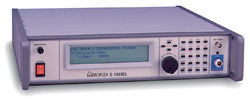
Aeroflex IFR S-1403DL-MLD Mode S Accessory for ATC-1400A
$6,170.00
Aeroflex IFR RDX-7708 Weather Radar Test Set
$21,229.00
Aeroflex IFR RD300 Weather Radar Test Set
$20,479.00
Aeroflex ATC-600A Portable Transponder/DME Test Set
$5,970.00
Xenotronix HPX60 Sealed Lead-Acid Battery Charger
$0.00





RF Transceivers & Test Sets
RF transceivers and RF test sets are integrated systems designed to generate, receive, analyze, and validate radio frequency signals within a single platform. These systems combine multiple RF functions into coordinated test environments, allowing engineers to evaluate complete RF devices and communication links rather than isolated components. At Aumictech, RF transceivers and test sets are positioned as system-level tools used for development, validation, production testing, and troubleshooting of advanced RF equipment.
Unlike standalone RF instruments, transceivers and test sets operate as closed-loop systems. They simulate real operating conditions by transmitting controlled signals, receiving responses, and measuring performance metrics in real time. This makes them essential for verifying end-to-end RF behavior.
Role of RF Transceivers and Test Sets in RF Systems
RF transceivers combine transmit and receive functions, enabling bidirectional communication testing. They are used to evaluate modulation accuracy, sensitivity, frequency stability, and overall link performance.
RF test sets extend this functionality by integrating additional measurement and control capabilities. These systems often include signal generation, signal analysis, power measurement, error detection, and protocol-specific testing within a unified framework.
In development environments, transceivers and test sets support rapid prototyping and system optimization. In production settings, they provide standardized testing platforms that ensure consistency and throughput. In service and maintenance operations, they enable fault isolation and performance verification in deployed systems.
Key Performance Characteristics
Frequency coverage defines the operating range of the transceiver or test set. Broad frequency support allows validation of multiple standards and device types.
Signal accuracy affects the reliability of transmitted and received data. Stable frequency generation, low phase noise, and accurate amplitude control are critical for meaningful test results.
Receiver sensitivity determines the ability to detect weak signals. High sensitivity is essential for evaluating receiver performance and link margins.
Linearity and dynamic range influence how well the system handles real-world signals without distortion or compression.
Measurement repeatability ensures that test results remain consistent across multiple runs and test stations, which is especially important in production environments.
Integration and automation capability determine how easily the system can be incorporated into automated test workflows.
Types of RF Transceivers and Test Sets
General-purpose RF transceivers are used for wideband signal generation and reception across multiple applications.
Protocol-specific test sets are designed to validate particular communication standards or system architectures. These are commonly used in telecommunications, defense, and industrial RF applications.
Production test sets are optimized for speed, repeatability, and reliability, supporting high-volume manufacturing environments.
Service and maintenance test sets are designed for portability and field use, enabling verification and troubleshooting of deployed RF systems.
Design and System Considerations
RF transceivers and test sets integrate multiple RF subsystems, including oscillators, mixers, amplifiers, filters, and detectors. System-level design focuses on maintaining signal integrity across all internal paths.
Thermal management is important for long-term stability, as integrated systems generate heat that can affect performance.
Calibration and internal reference stability play a key role in maintaining measurement accuracy over time.
User interface design and control flexibility influence how efficiently engineers can configure tests, interpret results, and integrate systems into larger workflows.
Applications Across Industries
RF transceivers and test sets are used across telecommunications, aerospace and defense, semiconductor manufacturing, and research institutions. They support validation of wireless devices, radar systems, secure communication links, and industrial RF equipment.
In calibration and compliance environments, test sets provide controlled conditions for verifying system performance against specifications.
Production environments rely on test sets to ensure consistent quality and compliance across large volumes of RF devices.
Field engineers use portable test sets to diagnose issues, verify installations, and confirm system operation in real-world conditions.