

Spectrum Analyzers
Showing 1009–1020 of 1021 results

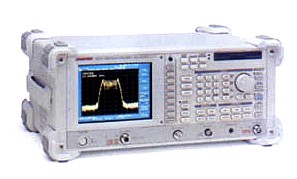
Advantest R3182 9kHz to 40 GHz R3182 Spectrum Analyzer
$3,779.00
Advantest R3172 9kHz to 26.5GHz Spectrum Analyzer
$10,880.00
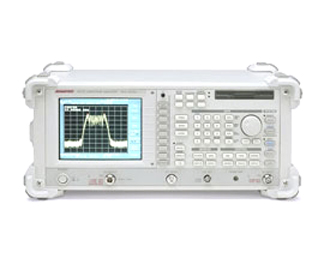
Advantest R3162 9kHz to 8GHz Spectrum Analyzer
$3,779.00
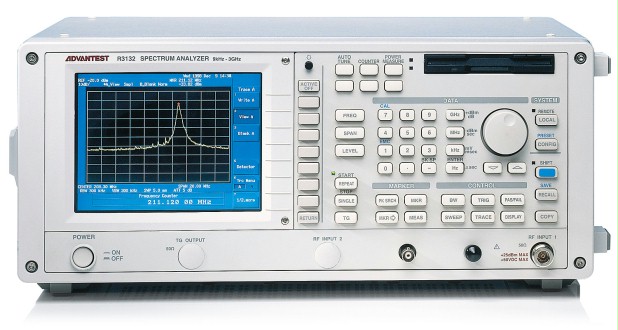
Advantest R3132 9 kHz to 3 GHz Spectrum Analyzer
$3,779.00
Advantest R3131A 9 kHz to 3 GHz Spectrum analyzer
$3,279.00Advantest R3131 9 kHz to 3 GHz Spectrum Analyzer
$3,279.00
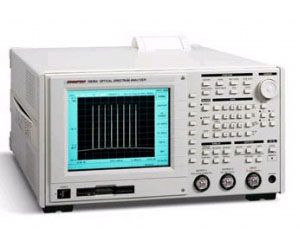
Advantest Q8384 600nm-1700nm Optical Spectrum Analyzer
$16,979.00Advantest Q82208 800nm-1700nm Optical Sensor Head
$879.00
Advantest Q82032A
$0.00
Advantest Q7760 – Optical Network Analyzer
$12,590.00
Abaco Systems / VMIC VMIVME-4900-224 Dual-Channel Digital to Synchro Board
$3,599.00
Abaco Systems / VMIC VMIVME-3111-000 Analog-to-Digital Converter (ADC) Module
$6,599.00






Spectrum Analyzers
Spectrum analyzers are precision measurement instruments used to observe, measure, and analyze signals in the frequency domain. They allow engineers to visualize signal amplitude versus frequency, revealing information that cannot be seen in time-domain measurements alone. At Aumictech, spectrum analyzers are treated as core RF diagnostic tools because they provide direct insight into signal behavior, interference, distortion, and spectral compliance.
In professional RF environments, spectrum analyzers are not used only for basic signal viewing. They are relied upon to validate transmitter performance, diagnose interference issues, characterize modulation quality, and ensure systems meet regulatory and design specifications. The accuracy and stability of a spectrum analyzer directly affect engineering decisions and system validation.
Role of Spectrum Analyzers in RF Systems
Spectrum analyzers are used to evaluate the frequency content of RF, microwave, and high-speed electronic signals. They allow engineers to identify carriers, harmonics, spurious emissions, noise floors, and unwanted interference.
In transmitter testing, spectrum analyzers verify output frequency accuracy, spectral purity, and compliance with emission limits. In receiver and system testing, they help diagnose noise, intermodulation products, and adjacent-channel interference.
In laboratory and development environments, spectrum analyzers support signal debugging, component characterization, and system optimization. In production and service environments, they enable rapid fault isolation and performance verification.
Key Performance Characteristics
Frequency range defines the span of frequencies the analyzer can measure. Broader coverage allows analysis of modern RF and microwave systems operating across wide bands.
Resolution bandwidth determines how closely spaced signals can be distinguished. Narrow bandwidth capability is critical for identifying low-level signals near strong carriers.
Noise floor affects the analyzer’s ability to detect weak signals. A low and stable noise floor is essential for sensitivity measurements and interference analysis.
Dynamic range defines how well the analyzer can measure large and small signals simultaneously without distortion.
Amplitude accuracy influences the reliability of power and emission measurements. Consistent amplitude performance is critical for compliance testing and comparative analysis.
Phase noise performance affects the analyzer’s ability to resolve signals close to the carrier frequency, especially in modern communication systems.
Sweep speed and processing capability impact measurement efficiency, particularly in automated test environments and wideband scans.
Types of Spectrum Analyzers
Swept-tuned spectrum analyzers are widely used for general-purpose RF measurements and provide reliable performance across a broad range of applications.
Real-time spectrum analyzers capture and analyze transient and rapidly changing signals, making them ideal for interference hunting and dynamic signal analysis.
Vector signal analyzers combine spectrum analysis with advanced demodulation and modulation analysis capabilities.
Portable spectrum analyzers support field testing, installation verification, and on-site troubleshooting.
High-performance laboratory spectrum analyzers are designed for maximum accuracy, stability, and measurement flexibility.
Design and Measurement Considerations
Spectrum analyzers rely on precision frequency conversion, filtering, and detection architectures. Internal oscillators, mixers, and reference standards play a key role in overall measurement accuracy.
Thermal stability is important, as temperature variations can affect frequency accuracy, amplitude response, and noise performance.
Input protection and attenuation control are critical for preventing damage when measuring high-power signals.
User interface design and measurement software influence how efficiently engineers can configure measurements, interpret results, and integrate analyzers into automated test systems.
Applications Across Industries
Spectrum analyzers are used across telecommunications, aerospace and defense, semiconductor manufacturing, broadcast engineering, and research laboratories. They support wireless system validation, radar testing, satellite communication analysis, and electromagnetic compatibility testing.
Calibration laboratories rely on spectrum analyzers to verify signal sources and validate spectral performance. Production environments use them to ensure consistency and compliance across manufactured RF devices.
Field engineers depend on spectrum analyzers for interference detection, system verification, and troubleshooting in real-world operating environments.