

VME Modules
Showing 1–12 of 85 results

National Instruments VME
$0.00L-3 / Titan / VisiCom VigraVision IV PMC Module
$0.00
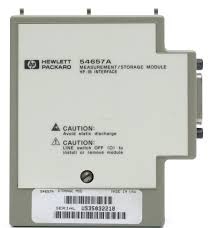
Keysight / Agilent / HP 54657A GPIB Measurement / Storage Module
$0.00
Emerson / Motorola MVME2604 VME64 Processor Module, 333 MHz, 128 MB RAM
$0.00
Emerson / Motorola MVME2604 VME64 Processor Module, 200 MHz, 32 MB RAM
$0.00
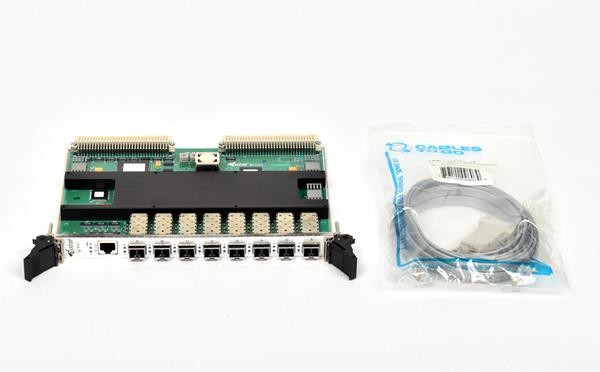
Curtiss-Wright / Systran VLX2500 VME Crossbar Switch Module – Conformal Coating
$0.00
HP / Agilent 5045A DIGITAL IC TESTER
$466.00Tracewell 580-6021-F00-00 / 580-6022-F00-00 8-Slot T-Frame for VME64x
$0.00Tokyo Electron TVB0004-1 / 147CON VME Communication Module
$0.00Tews Technologies TVME200-10 IndustryPack VMEbus Carrier
$0.00Tahoma / IKON 10089 DR11-W VMEbus Emulator
$0.00Seagate / Dot Hill / Ciprico RF3513 RIMFIRE VME Interface Module
$0.00




VME Modules
VME modules are modular computing and I O boards designed for use in VMEbus systems, a proven and widely deployed architecture in industrial, aerospace, defense, and mission-critical applications. These modules provide processing, data acquisition, control, and communication capabilities within rugged, high-reliability platforms. At Aumictech, VME modules are treated as system-critical components, because they often operate at the core of long-life systems where stability, compatibility, and supportability are essential.
Unlike consumer or commercial computing hardware, VME modules are built for deterministic performance, long-term availability, and operation in harsh environments. They are commonly deployed in systems that must remain operational for decades, often with strict requirements for uptime, environmental tolerance, and software compatibility.
Role of VME Modules in Embedded Systems
VME modules serve as functional building blocks within VMEbus chassis, enabling scalable and configurable system architectures. Depending on the module type, they may provide processing power, analog or digital I O, communication interfaces, timing functions, or specialized control capabilities.
In embedded systems, VME modules support real-time data processing, system monitoring, and hardware control. They are frequently used in applications where predictable timing, high reliability, and deterministic behavior are required.
VME systems allow multiple modules to communicate over a shared backplane, enabling distributed processing and flexible system expansion without redesigning the entire platform.
Key Performance Characteristics
Bus compatibility defines how the module interfaces with the VMEbus standard, including data width, address space, and transfer modes. Proper compatibility ensures reliable communication within the system.
Processing capability varies depending on module function and may include embedded CPUs, signal processors, or dedicated control logic.
I O performance determines how effectively the module can acquire, generate, or control signals. This includes resolution, throughput, and timing accuracy.
Reliability and longevity are critical, as VME modules are often deployed in systems with extended service lives and limited upgrade cycles.
Environmental tolerance defines how well the module operates under temperature extremes, vibration, and electrical noise.
Firmware and software support influence long-term maintainability and integration with existing systems.
Types of VME Modules
Processor modules provide embedded computing capability and often host operating systems and application software.
Digital and analog I O modules support data acquisition, control, and monitoring of external signals.
Communication modules enable interfaces such as Ethernet, serial, or fieldbus connectivity.
Timing and synchronization modules provide precise clocking and trigger distribution for coordinated system operation.
Specialized VME modules are designed for application-specific tasks such as radar processing, avionics control, or industrial automation.
Design and System Considerations
VME modules are designed with strict mechanical and electrical specifications to ensure reliable backplane connectivity and signal integrity. Connector quality and board layout play a significant role in performance and durability.
Thermal management is critical, especially in densely populated chassis and high-power modules. Proper cooling ensures stable operation and long-term reliability.
Compatibility with existing systems is a key consideration, as many VME installations must support legacy hardware and software environments.
Configuration flexibility and documentation are important for efficient system integration, troubleshooting, and maintenance.
Applications Across Industries
VME modules are widely used in aerospace and defense systems, including radar, avionics, and mission control platforms. They are also found in industrial automation, transportation systems, and scientific research facilities.
Test and measurement systems use VME modules for high-speed data acquisition and control in specialized applications.
Government and defense programs rely on VME architectures due to their stability, standardization, and long-term support.