

VXI Modules
Showing 73–84 of 85 results

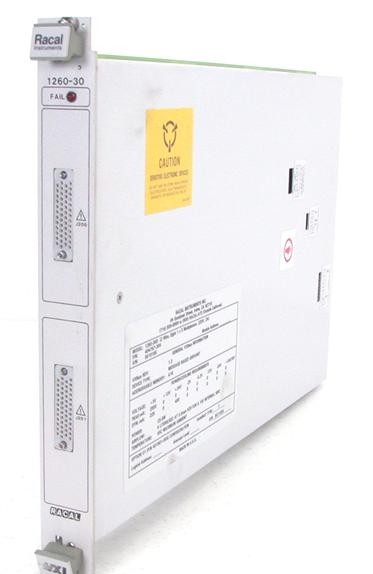
Astronics / EADS / Racal 1260-30A Multiplexer VXI Module
$0.00
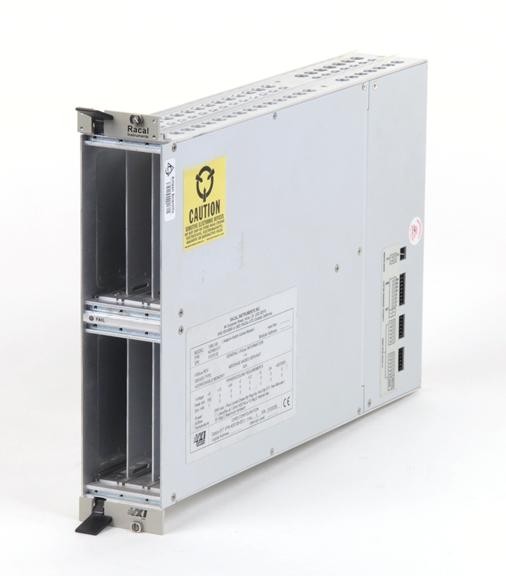
Astronics / EADS / Racal 1260-100 VXIbus Switch Carrier
$0.00
Astronics / C&H Technologies VX491C Counter/Clock VXI Module
$0.00
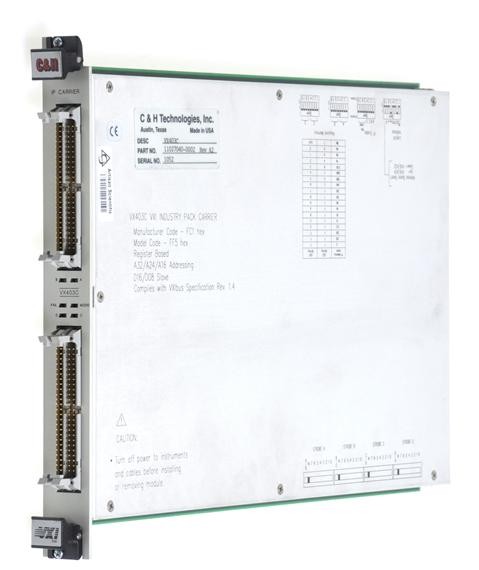
Astronics / C&H Technologies VX403C VXI Industry Pack Carrier Module
$0.00
AND VX4500-X VXI Module
$0.00
Analogic DBS9900 VXI C-Size Dual Instrument Carrier
$0.00Ametek / VTI Instruments / VXI Technology 33-0011-000 VXIbus Communication Board
$0.00
Agilent / National Instruments E1482B VXI-MXI w/ INTX PCB Assembly
$770.00
Agilent / Keysight E9851A VXI Pentium PC Controller, 700 MHz, Windows NT
$5,650.00Agilent / Keysight E9850A VXI Pentium PC Controller, 450 MHz, Windows 95/NT
$5,650.00
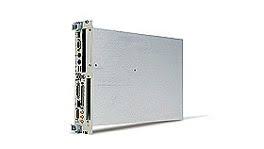
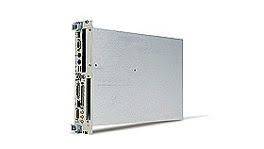
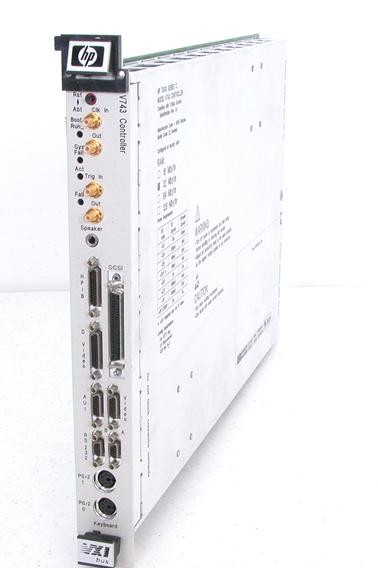
Agilent / Keysight E1498A V743/100 VXI Embedded Controller
$2,410.00
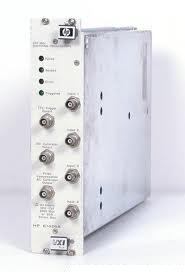
Agilent / Keysight E1426A 500 MHz, 4-Channel VXI Oscilloscope
$3,963.58



VXI Modules
VXI modules are modular instrumentation and control boards designed for use in VXIbus systems, a platform widely deployed in automated test, aerospace, defense, and long-life industrial applications. Built on the VME architecture and extended for instrumentation, VXI modules provide tightly synchronized measurement, stimulus, and control capabilities within a standardized chassis. At Aumictech, VXI modules are treated as precision test building blocks, because they often form the backbone of mission-critical automated test systems.
Unlike standalone bench instruments, VXI modules are designed to operate as part of an integrated test environment. They share timing, triggering, and communication resources through the backplane, enabling coordinated, high-throughput testing across multiple measurement and stimulus functions.
Role of VXI Modules in Automated Test Systems
VXI modules enable scalable and configurable test architectures by allowing multiple measurement and signal generation functions to coexist within a single chassis. These modules support deterministic timing and synchronization, which are essential for complex test sequences and high-speed data acquisition.
In automated test equipment environments, VXI modules are used to perform stimulus, measurement, switching, and control operations with tight coordination. This makes them especially valuable in applications where repeatability, throughput, and long-term system stability are required.
VXI systems are commonly deployed in programs that must be supported for many years, often with strict requirements for backward compatibility and software continuity.
Key Performance Characteristics
Measurement accuracy defines how precisely the module can generate or acquire signals. High accuracy is essential for reliable test results and compliance validation.
Timing and synchronization capability determine how well multiple modules can operate together. VXI systems rely on shared clocks and triggers to coordinate complex test operations.
Throughput and bandwidth affect how quickly data can be acquired, processed, and transferred within the system.
Modularity and scalability allow systems to be expanded or reconfigured as test requirements evolve without redesigning the entire platform.
Reliability and longevity are critical, as VXI modules are often used in high-duty automated test environments with long operational lifetimes.
Software compatibility influences ease of integration and long-term maintainability within existing test frameworks.
Types of VXI Modules
Measurement modules include digitizers, signal conditioners, and sensor interfaces used for data acquisition.
Signal generation modules provide RF, analog, or digital stimulus for device and system testing.
Switching modules enable signal routing and resource sharing across multiple test points.
Control and timing modules manage synchronization, triggering, and system coordination.
Specialized VXI modules support application-specific functions such as avionics testing, radar validation, or communication system verification.
Design and System Considerations
VXI modules are designed with precise mechanical alignment and robust backplane interfaces to ensure reliable connectivity and signal integrity. Connector quality and shielding play an important role in maintaining measurement accuracy.
Thermal management is important in densely populated chassis, as heat can affect performance and long-term reliability.
System integration considerations include software drivers, test executive compatibility, and documentation availability.
Maintaining compatibility with existing VXI systems is often a key requirement, especially in legacy test environments.
Applications Across Industries
VXI modules are widely used in aerospace and defense test systems, including avionics, radar, and electronic warfare applications. They are also found in semiconductor testing, telecommunications validation, and industrial automation environments.
Government and defense programs rely on VXI architectures due to their deterministic behavior, standardization, and long-term support.
Manufacturing test environments use VXI systems to ensure consistent quality and compliance across high-value products.