

Tunable Laser Sources
Showing 169–180 of 215 results

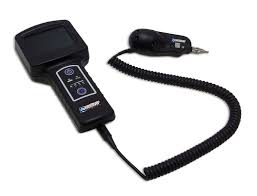
Westover Scientific HD1 Fiber Inspection System
$290.00
SYNRAD Carbon Dioxide Laser J48-1W 30-32VDC new W DISPLAY
$3,830.00Photonetics Tunics-BT 3648HE 1560 with Opt. C Tunable External Cavity Laser
$2,930.00Photonetics 3642HE15 TUNICS PRI TUNABLE LASER SOURCE same as sws15101
$7,830.00MPB Technologies EBS-4022 Er3+ Erbium Broadband Source
$1,530.00
JDSU SWS15101 Tunable Laser
$8,430.00
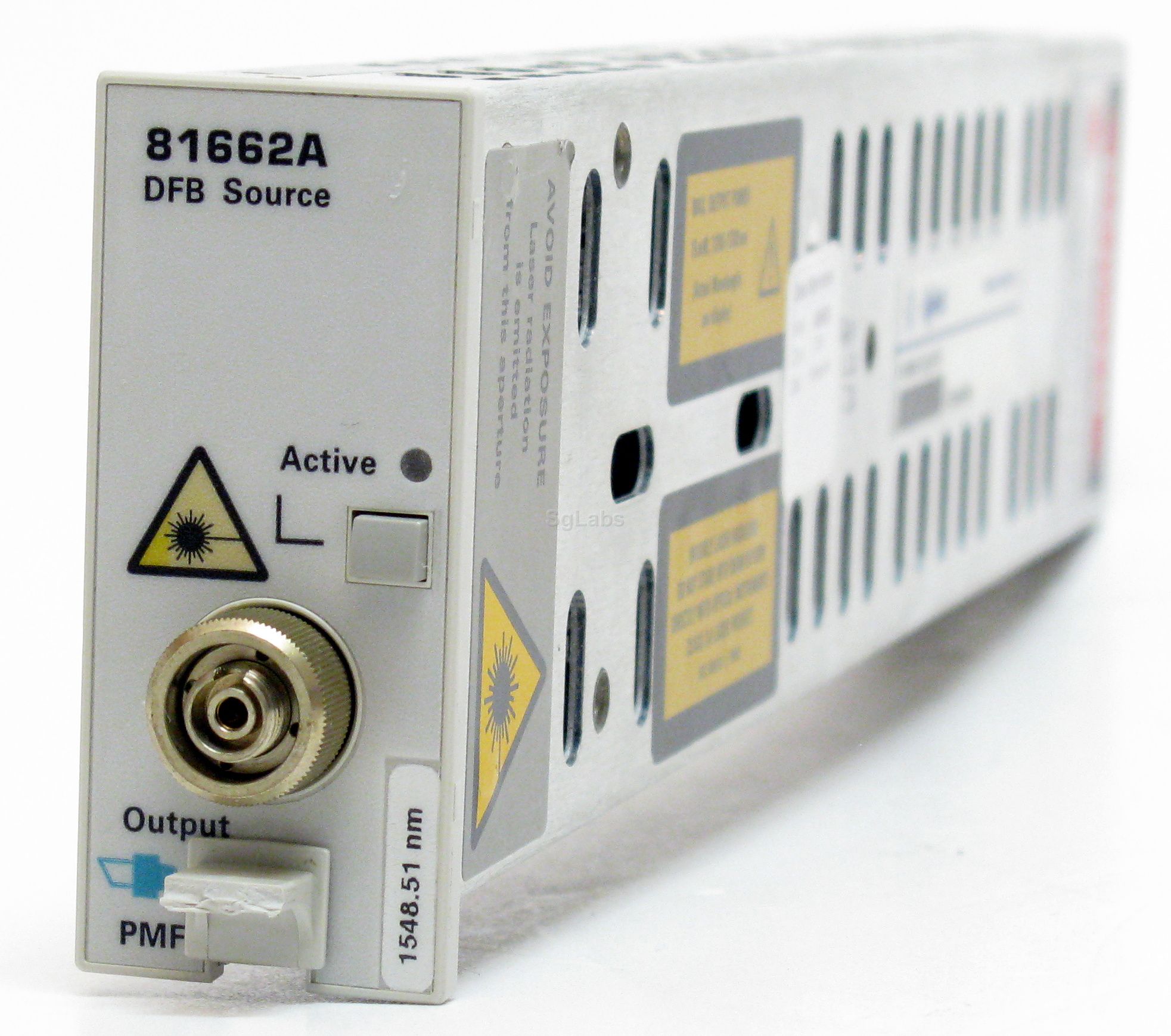
HP/Agilent 81662A: DFB Laser Source Module with option 483
$930.00HP/Agilent 81662A: DFB Laser Source Module with option 379
$1,930.00
HP AGILENT 81554SM LASER SOURCE 1310/1550 nm
$930.00
HP 8168F Tunable Laser source 1440-1592nm OR 1508-1625nm
$8,430.00
HP 8168D OR B Tunable Laser source
$6,430.00HP 81689A Tunable Laser module.w opt 021
$3,405.00




Tunable Laser Sources
Tunable laser sources are precision optical instruments used to generate laser output at adjustable wavelengths across defined spectral ranges. They are essential tools in optical testing, component characterization, and research environments where wavelength control and stability directly affect measurement accuracy. At Aumictech, tunable laser sources are treated as primary optical reference instruments, because precise wavelength control is foundational to reliable optical system validation.
Unlike fixed-wavelength lasers, tunable laser sources allow continuous or stepwise wavelength adjustment. This enables engineers to sweep across optical bands, evaluate wavelength-dependent behavior, and precisely target specific channels or spectral regions. In fiber-optic and photonic systems, tunable lasers are critical for verifying performance under real operating conditions.
Role of Tunable Laser Sources in Optical Systems
Tunable laser sources are used to stimulate optical components and systems with controlled, narrow-linewidth light at selectable wavelengths. This allows accurate testing of devices such as optical filters, amplifiers, modulators, switches, and transceivers.
In fiber-optic communication testing, tunable lasers are used to characterize insertion loss, wavelength selectivity, polarization effects, and channel isolation. In research environments, they enable exploration of material properties, nonlinear effects, and wavelength-sensitive phenomena.
Tunable laser sources are also widely used in calibration workflows, where known and stable wavelengths are required to validate optical measurement equipment and systems.
Key Performance Characteristics
Wavelength range defines the spectral span over which the laser can be tuned. Coverage across key optical bands is essential for modern communication and photonic applications.
Wavelength accuracy and repeatability determine how precisely the laser output aligns with the selected wavelength setting. High accuracy is critical for channel-specific testing and calibration.
Linewidth affects spectral purity and resolution. Narrow linewidth sources are required for high-resolution measurements and sensitive optical analysis.
Output power stability influences measurement consistency. Stable power across wavelength sweeps ensures reliable characterization of optical components.
Tuning speed determines how quickly the laser can move between wavelengths. Fast tuning is important for automated testing and high-throughput measurement environments.
Polarization stability is important in applications where polarization-dependent effects must be controlled or evaluated.
Types of Tunable Laser Sources
External cavity tunable lasers provide wide tuning ranges and narrow linewidths, making them suitable for high-precision laboratory and research applications.
Distributed feedback and tunable diode lasers offer compact designs and fast tuning for production and system-level testing.
Swept-source lasers are optimized for continuous wavelength scanning and are commonly used in optical sensing and imaging applications.
High-power tunable lasers support testing of optical amplifiers and high-loss systems.
Design and Stability Considerations
Tunable laser sources are designed with precise optical cavities, wavelength control mechanisms, and stabilization systems. Temperature control plays a critical role in maintaining wavelength accuracy and output stability.
Mechanical stability and vibration isolation are important to preserve spectral performance, especially in narrow-linewidth designs.
Optical interfaces and connectors must maintain low loss and minimal back reflection to prevent instability and measurement artifacts.
Control interfaces and software integration influence how effectively tunable lasers can be incorporated into automated test systems and complex optical setups.
Applications Across Industries
Tunable laser sources are used across fiber-optic telecommunications, photonics research, semiconductor manufacturing, and optical component testing. They support development and validation of DWDM and CWDM systems, optical sensors, and advanced photonic devices.
Calibration laboratories rely on tunable lasers to establish wavelength references and validate optical measurement instruments.
Production environments use tunable laser sources to verify component performance, screen for defects, and ensure consistency across manufactured optical devices.
Research institutions depend on tunable lasers for experimental studies, spectroscopy, and advanced optical system development.